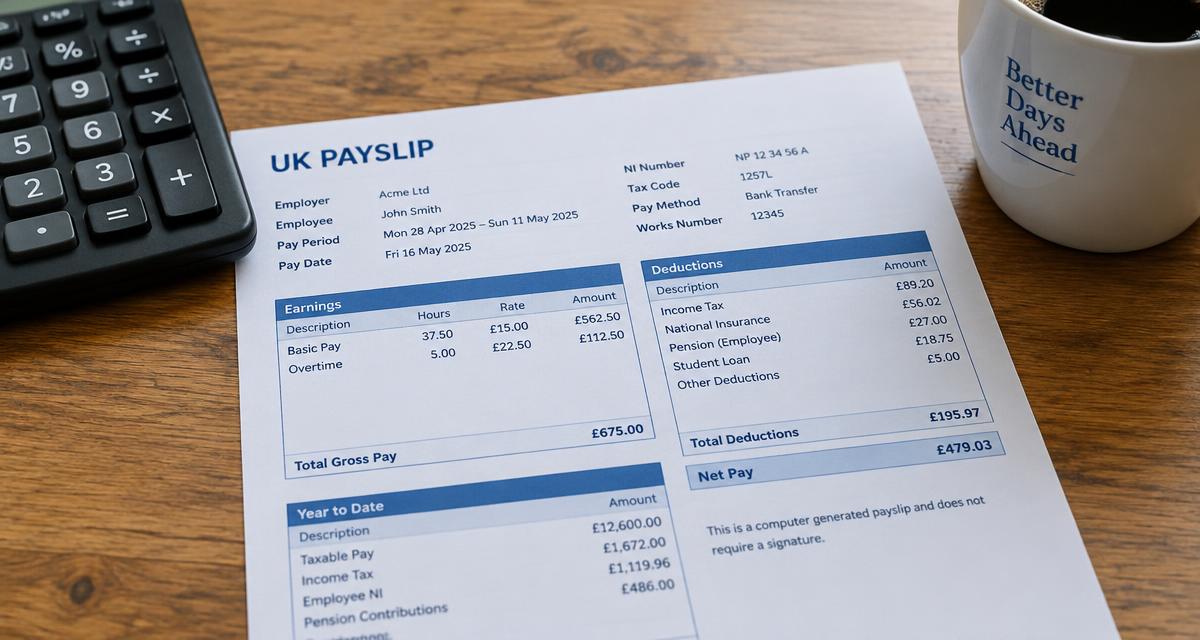
As a Band 4 member of NHS staff, your gross annual salary for 2025/26 will start at £27,485. After deductions for income tax, National Insurance, and an 8.3% pension contribution, your estimated monthly take-home pay will be around £1,790. This figure can increase with experience and unsocial hours payments.
Understanding your payslip can feel complicated, with various deductions chipping away at your gross salary. This guide breaks down exactly what those deductions are and how they affect your final take-home pay, helping you budget and plan with confidence.
What is an NHS Band 4 salary in 2025/26?
All NHS staff, apart from doctors, dentists, and very senior managers, are paid on the Agenda for Change (AfC) pay system. This system ensures equal pay for work of equal value and provides a clear path for salary progression.
For the financial year starting 1 April 2025, the salary for Band 4 is:
- Starting salary: £27,485 per year
- Top of Band 4: £30,162 per year
When you start a Band 4 role, you will be placed on the lowest pay point. You then move up to the next pay point after a set number of years' experience in the role, until you reach the top of the band. Your employment contract or the official NHS Employers handbook will specify the exact length of time required for each increment.
Band 4 roles are vital to the health service and include positions like senior healthcare assistants, assistant practitioners, and experienced administrative staff. These roles often involve a blend of clinical or technical skills and supervisory responsibilities.
From gross salary to net take-home pay
Your payslip shows your 'gross' salary, which is the headline figure of £27,485 or more. However, the amount that actually arrives in your bank account is your 'net' pay. The difference is accounted for by several standard deductions.
The three main deductions for most NHS staff are:
- Income Tax: Paid to HMRC on your earnings above a certain threshold.
- National Insurance (NI): Contributions that fund state benefits like the State Pension.
- NHS Pension: Your personal contribution towards your future retirement benefits.
You may have other deductions depending on your circumstances, such as student loan repayments, union membership fees, or payments for salary sacrifice schemes like childcare vouchers or a lease car.
Your deductions explained
Let's look at how each of the main deductions is calculated, using the tax and National Insurance rates for the 2026/27 tax year.
Income Tax
In the UK (excluding Scotland, which has different rates), you have a Personal Allowance. This is the amount you can earn each year before you start paying any income tax. For 2026/27, this is £12,570.
Any income you earn between £12,570 and £50,270 is taxed at the basic rate of 20%. As a Band 4 employee, your entire taxable salary will fall within this basic rate band.
Crucially, your NHS Pension contributions are deducted before your tax is calculated. This is known as a 'net pay arrangement' and it effectively reduces your taxable income, meaning you pay less tax.
National Insurance
National Insurance is calculated on your gross pay, not your post-pension pay. For 2026/27, you will pay 8% on earnings between £12,570 and £50,270 per year. You pay nothing on earnings below this threshold.
NHS Pension contributions
The NHS Pension Scheme is one of the most valuable benefits of working in the health service. Your contribution rate depends on your actual pensionable earnings.
From April 2025, the contribution tiers relevant to a Band 4 salary are:
- £13,260 to £27,288: 6.5%
- £27,289 to £33,247: 8.3%
A full-time Band 4 employee earning £27,485 will contribute 8.3% of their salary. If you work part-time and your actual earnings fall below £27,289, you would pay the lower 6.5% rate.
For every pound you put in, your employer contributes significantly more (23.7% of your salary). Most new staff join the 2015 CARE scheme, where you build up a pension based on 1/54th of your pensionable pay each year, which is then revalued annually to keep up with inflation plus 1.5%.
Worked example: A Band 4's monthly take-home pay
Let's imagine a new, full-time Band 4 administrative assistant who has just started their role. They are not repaying a student loan and have no other deductions.
Here is an estimate of their monthly pay:
- Annual Gross Salary: £27,485
- Monthly Gross Salary: £2,290.42
Now for the deductions:
- Pension: Their salary puts them in the 8.3% tier. Their monthly contribution is £2,290.42 x 8.3% = £190.10.
- Income Tax: Tax is calculated on pay after pension is deducted. Their monthly taxable pay is £2,290.42 - £190.10 = £2,099.32. The monthly tax-free allowance is £12,570 / 12 = £1,047.50. So, they pay 20% tax on (£2,099.32 - £1,047.50), which comes to £210.36.
- National Insurance: NI is calculated on gross pay. The monthly NI-free allowance is also £1,047.50. So, they pay 8% NI on (£2,290.42 - £1,047.50), which comes to £99.43.
Total Monthly Deductions: £190.10 (Pension) + £210.36 (Tax) + £99.43 (NI) = £499.89
Estimated Net Monthly Pay: £2,290.42 - £499.89 = £1,790.53
For a personalised estimate based on your exact circumstances, you can use our NHS take-home pay calculator.
Comparing Band 4 pay points
As you gain experience and move to the top of the band, your gross salary increases to £30,162. While your deductions will also increase, your net pay will see a healthy boost.
This table shows an estimated comparison for a full-time employee, assuming standard tax, NI, and pension deductions.
| Pay Point | Gross Annual | Gross Monthly | Estimated Net Monthly |
|---|---|---|---|
| Bottom of Band 4 | £27,485 | £2,290 | ~£1,791 |
| Top of Band 4 | £30,162 | £2,514 | ~£1,936 |
Reaching the top of the band could increase your monthly take-home pay by over £140, a significant difference that rewards your experience and loyalty.
How do unsocial hours and overtime affect pay?
The calculations above are based on a standard 37.5-hour week with no additional payments. Many Band 4 roles, especially clinical ones, require working nights, weekends, and bank holidays.
Agenda for Change includes pay enhancements for this 'unsocial hours' work. These payments are added to your basic salary and are pensionable, meaning they will increase your gross pay but also the amount you pay in pension, tax, and NI. While your deductions will be higher, your overall net pay will increase.
Overtime is typically paid at a higher rate (e.g., time-and-a-half). You should check your local trust's policy for specific rates and rules, as these can vary.
Maximising your Band 4 role and pay
A Band 4 position is a fantastic platform for a long and rewarding NHS career. Here are a few practical tips to make the most of your role and your earnings.
- Read your payslip: Get into the habit of checking your payslip each month. Make sure your pay point is correct and you understand all the deductions. If anything looks wrong, speak to your payroll department straight away.
- Check your tax code: Your tax code tells your employer how much tax to deduct. The standard code for 2026/27 will be 1257L. If you have another job or other sources of income, your code might be different. An incorrect code can lead to you paying too much or too little tax, so it's worth checking on the GOV.UK website.
- Understand your pension: The NHS Pension is a major part of your total reward package. Take time to understand how it works and the benefits it provides for your future.
- Plan for progression: Band 4 is an excellent stepping stone to Band 5 and beyond. Talk to your line manager about development opportunities, take advantage of any training offered, and think about what you need to do to take the next step. When you're ready to apply for a promotion, our Pro CV builder can help you create a compelling application that highlights your skills and experience.
Key takeaways
- The NHS Band 4 salary scale for 2025/26 runs from £27,485 to £30,162 per year.
- A new full-time Band 4 employee can expect to take home around £1,790 per month after tax, NI, and pension deductions.
- At the top of the band, this rises to approximately £1,936 per month.
- Your main deductions are Income Tax (20%), National Insurance (8%), and your NHS Pension contribution (8.3% for most full-time Band 4 staff).
- Your NHS Pension contribution is taken before tax, which reduces your overall tax bill.
- Pay can be boosted by unsocial hours enhancements, overtime, and High Cost Area Supplements if you work in an expensive area like London.
- Regularly checking your payslip and tax code is essential to ensure you are being paid correctly.