What is the NHS Band 8a salary in 2025/26?
The NHS Agenda for Change (AfC) pay structure is a national framework that ensures equal pay for work of equal value. Band 8a is the first of four senior management pay bands, covering roles like service managers, modern matrons, and highly specialised clinical practitioners.
For the pay year starting 1 April 2025, the Band 8a salary spine points in England are:
- Starting salary: £53,755
- After 5 years' experience: £60,504
You will typically start at the bottom of the band and move to the top point after completing five years of service in that role. This progression is not automatic and is usually linked to you meeting the performance requirements of your role, which will be reviewed annually.
These figures are for a full-time contract of 37.5 hours per week. If you work part-time, your salary will be calculated on a pro-rata basis. Pay scales in Scotland, Wales, and Northern Ireland are determined by their respective governments and may differ slightly, so it's always wise to check the specific rates for your nation.
From gross pay to net pay: Understanding your deductions
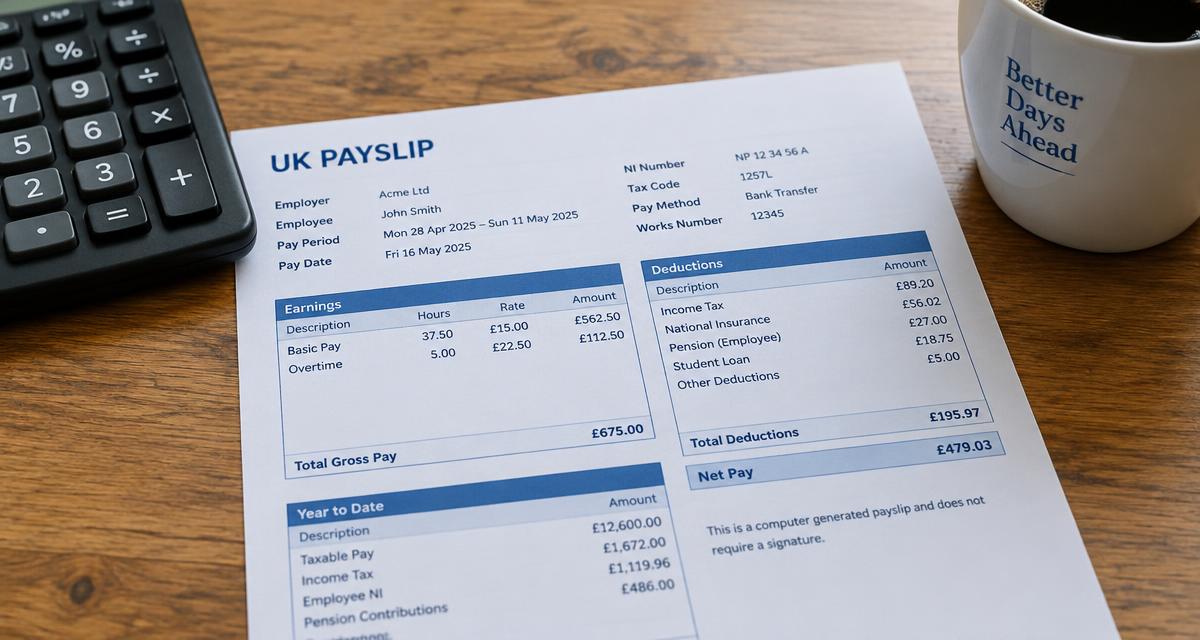
Your payslip can feel complex, but the journey from your gross (total) salary to your net (take-home) pay involves a few key steps. Your employer deducts several things from your salary each month on your behalf.
The main deductions for almost every NHS employee are:
- NHS Pension contributions: Your payment into one of the UK's best public sector pension schemes.
- Income Tax: A tax paid to HMRC on your earnings above a certain threshold.
- National Insurance (NI): Contributions that pay for certain state benefits, including the State Pension.
You may also have other deductions, which could include:
- Student loan repayments
- Union subscriptions (e.g., RCN, Unison, BMA)
- Salary sacrifice schemes, such as for a lease car, childcare vouchers, or a cycle-to-work scheme
- Parking permits or other local arrangements
These additional items vary from person to person, but the 'big three' – pension, tax, and NI – are the most significant for calculating your base take-home pay.
Your NHS Pension contributions
The NHS Pension Scheme is a major benefit of your employment. It’s a defined benefit scheme, which means the pension you get at retirement is based on your salary and how long you've been a member, rather than the performance of investments.
Your contribution rate is a percentage of your gross salary, set in tiers. With a Band 8a salary of £53,755 to £60,504, you fall into the following tier from April 2025:
- Pensionable Pay: £49,914 to £63,994
- Your Contribution Rate: 10.7%
This means you’ll contribute 10.7% of your gross pay each month to your pension. In return, the NHS as your employer contributes a substantial 23.7%.
Crucially, the NHS Pension operates on a 'net pay arrangement'. This means your pension contribution is deducted before your income tax is calculated. This is beneficial because it reduces your taxable income, meaning you pay less tax than you otherwise would.
Most members who joined after 2015 are in the 2015 CARE scheme. In this scheme, you build up a pension equal to 1/54th of your pensionable pay for each year you are a member. This pot is then revalued each year to protect it against inflation, ensuring its value grows until you retire.
Calculating Income Tax and National Insurance
As a Band 8a earner, you will be a higher-rate taxpayer. It’s important to understand how this works, as it has a significant impact on your net pay.
For the 2026/27 tax year in England, Wales, and Northern Ireland (rUK), the rates are as follows:
- Personal Allowance: You pay no tax on the first £12,570 you earn.
- Basic Rate: You pay 20% tax on earnings between £12,571 and £50,270.
- Higher Rate: You pay 40% tax on earnings above £50,270.
Remember, your pension contribution is taken before tax. This means your 'taxable income' is your gross salary minus your pension contribution. Since a Band 8a salary is over £50,270 even after pension deductions, a portion of your income will be taxed at the 40% rate.
National Insurance Contributions
National Insurance is calculated separately from income tax and is based on your gross earnings (before pension is deducted). The rates are:
- 0% on earnings up to £12,570.
- 8% on earnings between £12,570 and £50,270.
- 2% on any earnings above £50,270.
This tiered system means you only pay the higher rates on the portion of your salary that falls into each band, not on your entire salary.
Worked example: A Band 8a's monthly take-home pay
Let's put all this together to see what it looks like in practice. We’ll consider a senior nurse specialist who has been in their Band 8a role for several years and is at the top of the pay scale.
This example assumes a standard tax code (1257L) and no other deductions like a student loan.
| Item | Annual Figure | Monthly Figure |
|---|---|---|
| Gross Salary | £60,504.00 | £5,042.00 |
| Deductions: | ||
| NHS Pension (10.7%) | -£6,473.93 | -£539.49 |
| Income Tax | -£9,044.03 | -£753.67 |
| National Insurance | -£3,220.68 | -£268.39 |
| Total Deductions | -£18,738.64 | -£1,561.55 |
| Net Take-Home Pay | £41,765.36 | £3,480.45 |
How we calculated this:
- Pension: 10.7% of the gross salary of £60,504 is £6,473.93 for the year.
- Taxable Income: We subtract the pension from the gross salary: £60,504 - £6,473.93 = £54,030.07.
- Income Tax: The first £12,570 of taxable income is tax-free. The amount between £12,570 and £50,270 (£37,700) is taxed at 20% (£7,540). The remaining amount above £50,270 (£3,760.07) is taxed at 40% (£1,504.03). Total annual tax is £9,044.03.
- National Insurance: This is calculated on gross pay. The amount between £12,570 and £50,270 (£37,700) is charged at 8% (£3,016). The amount above £50,270 (£10,234) is charged at 2% (£204.68). Total annual NI is £3,220.68.
As you can see, the deductions total over £1,500 per month, resulting in a net pay of around £3,480. This is a realistic estimate, but your own pay will vary. For a calculation tailored to your circumstances, including student loan repayments or salary sacrifice schemes, you can use our NHS take-home pay calculator.
Boosting your earnings and career
While your core salary is set by Agenda for Change, there may be opportunities to increase your overall earnings and advance your career.
- On-Call Payments: Many senior operational and clinical roles at Band 8a come with an on-call commitment. This work is paid via an availability allowance and payments for any work undertaken while called out. Check your local policy for specific rates.
- Unsocial Hours Enhancements: While less common in 9-5 managerial roles, if your Band 8a role requires you to work nights, weekends, or bank holidays as part of your standard rota, you will be eligible for enhancements.
- Waiting List Initiatives (WLI) or Bank Work: You may be able to join your Trust’s staff bank to take on additional clinical or managerial shifts, which are often paid at a higher hourly rate. This can be a flexible way to supplement your income.
- Career Progression: The most significant way to increase your earnings is to secure a promotion. Moving to a Band 8b role would see your starting salary jump to over £62,000. This requires taking on more responsibility, leading larger teams, or managing more complex services. Polishing your application skills is key. Our Application Co-pilot can help you write compelling supporting statements that highlight your achievements and suitability for a higher-banded role.
Investing in your professional development and ensuring your CV reflects your growing expertise are crucial steps for promotion. A well-structured CV, perhaps created with a dedicated CV builder, can make all the difference when applying for competitive 8b and 8c positions.
Key takeaways
- The NHS Band 8a salary for 2025/26 in England is £53,755, rising to £60,504 with experience.
- Your take-home pay is your gross salary minus key deductions: pension, income tax, and National Insurance.
- At this salary level, you will pay the 40% higher rate of income tax on a portion of your earnings.
- Your NHS Pension contribution will be 10.7% of your gross pay. This is deducted before tax, which provides you with tax relief.
- National Insurance is charged at 8% on earnings up to £50,270 and 2% on earnings above that threshold.
- The final amount in your bank account will depend on your exact pay point, tax code, and any other personal deductions such as student loan or union fees.