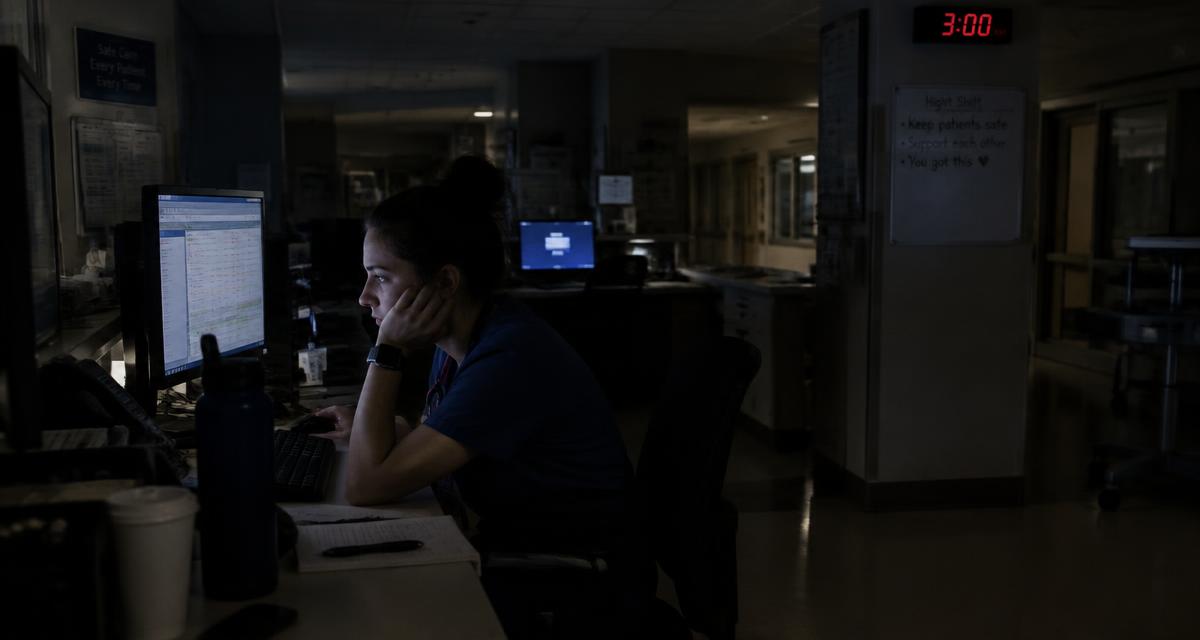
Working around the clock is a core part of life in the NHS. In recognition of this, staff on Agenda for Change (AfC) contracts receive extra pay for working at less sociable times. This guide explains what counts as an 'unsocial hour' and how the pay enhancement is calculated for your band.
What are unsocial hours in the NHS?
The NHS defines unsocial hours as any time worked outside of the standard Monday to Friday, 7am to 8pm pattern. If your shift falls, in whole or in part, within these periods, you are entitled to an enhanced rate of pay for those specific hours.
Under the national Agenda for Change agreement, the unsocial hours periods are:
- On weekdays: Any time before 07:00 and any time after 20:00.
- All day on Saturdays.
- All day on Sundays.
- All day on public holidays (commonly known as bank holidays).
For example, if you work a long day from 8am to 8:30pm on a Tuesday, the 30 minutes worked after 8pm would attract an unsocial hours payment. If you work a night shift from 7:30pm to 8am, the hours from 8pm to 7am would be paid at the enhanced rate.
These definitions apply across the UK under the AfC framework. While the vast majority of trusts follow this national agreement, there can occasionally be local variations. It’s always wise to check your own contract or staff handbook to be certain of the exact terms in your place of work.
How much extra is unsocial hours pay?
The extra pay you receive is a percentage enhancement on top of your basic hourly rate. The exact percentage depends on two factors: your AfC pay band and when you work the hours.
The system is designed with two main enhancement levels:
- A standard rate for weekday nights and all of Saturday.
- A higher rate for all of Sunday and any public holidays.
This means you’ll earn more for working a Sunday day shift than you would for a Tuesday night shift. The table below breaks down the enhancement rates for each pay band as set out in Annex 5 of the NHS Terms and Conditions Handbook.
| Pay Band | Weekday Night & Saturday Enhancement | Sunday & Bank Holiday Enhancement |
|---|---|---|
| Band 1 (closed to new entrants) | Time plus 50% | Time plus 100% (double time) |
| Band 2 | Time plus 44% | Time plus 88% |
| Band 3 | Time plus 37% | Time plus 73% |
| Bands 4 to 9 | Time plus 30% | Time plus 60% |
As you can see, the enhancement percentage is highest for the lower bands, reflecting the greater impact that unsocial hours work can have on staff in those roles relative to their basic pay. For the majority of clinical and non-clinical staff in Band 4 and above, the rates are a standard 30% for nights and Saturdays, and 60% for Sundays and bank holidays.
A worked example: Calculating your enhanced pay
Seeing how the numbers work in practice can make things much clearer. Let's take the example of a Band 5 staff nurse working a couple of unsocial shifts in one week.
Imagine their basic hourly rate is £16.00 per hour. They are rostered to work two 12.5-hour shifts (with a 30-minute unpaid break, so 12 paid hours):
- Shift 1: A night shift on a Tuesday, from 19:30 to 08:00.
- Shift 2: A day shift on a Sunday, from 07:30 to 20:00.
Calculating the Tuesday Night Shift Pay
First, we need to identify the unsocial hours. The shift runs from 19:30 to 08:00. The 'social' hours are between 7am and 8pm.
- The first 30 minutes of the shift (19:30 to 20:00) are paid at the basic rate.
- The hours from 20:00 to 07:00 are unsocial. This is a total of 11 hours.
- The final hour of the shift (07:00 to 08:00) is back in social hours, paid at the basic rate.
So, in this 12-hour paid shift, 11 hours qualify for the enhancement. As a Band 5, the weekday night enhancement is 30%.
- Enhanced hourly rate: £16.00 + 30% = £20.80
- Pay for unsocial hours: 11 hours x £20.80 = £228.80
- Pay for social hours: 1 hour x £16.00 = £16.00
- Total pay for the shift: £228.80 + £16.00 = £244.80
Calculating the Sunday Day Shift Pay
This one is more straightforward. All hours worked on a Sunday are classed as unsocial.
The enhancement for a Band 5 working on a Sunday is 60%.
- Enhanced hourly rate: £16.00 + 60% = £25.60
- Pay for the shift: 12 hours x £25.60 = £307.20
By working these two shifts, the Band 5 nurse earned an extra £108 in enhancements compared to working the same hours on a weekday. You can use our NHS take-home pay calculator to get a better idea of how these enhancements affect your net pay after tax and other deductions.
How unsocial hours affect holiday and sick pay
A key benefit of the Agenda for Change agreement is how it protects your income when you're unwell or taking well-deserved annual leave.
Your pay during sick leave and annual leave is based on what you would have earned if you had been at work. This means that if you were rostered to work shifts with unsocial hours while you were off, your pay for that period should include the enhancements you would have received.
For example, if you take a week of annual leave and your rota shows you were scheduled to work a Saturday and a Sunday, your holiday pay for that week must include the relevant Saturday and Sunday enhancements. The same principle applies to sick pay. This ensures your income remains stable and you aren't financially penalised for taking time off.
It's always good practice to keep an eye on your payslips after a period of leave or sickness to ensure your pay has been calculated correctly based on your normal shift pattern.
Unsocial hours, overtime and bank shifts
It's important to understand how unsocial hours pay interacts with other payments, like overtime.
Overtime is for any hours you work above your standard contracted hours (usually 37.5 per week). Standard overtime is paid at time-and-a-half. If you work overtime on a bank holiday, it's paid at double time.
A common point of confusion is whether you get the unsocial hours enhancement *on top of* the overtime rate. The answer is no. The AfC handbook states that you will be paid the single highest applicable rate for those hours. For instance, if a Band 5 works extra hours on a Saturday night, they would compare the overtime rate (time-and-a-half, or +50%) with the unsocial hours rate (time plus 30%). They would be paid the overtime rate as it is more favourable. However, if they worked overtime on a Sunday, the unsocial hours rate (+60%) is higher than the overtime rate (+50%), so they would be paid the Sunday enhancement instead.
Bank shifts, whether through an internal trust bank or NHS Professionals, often operate differently. The hourly rate for a bank shift is frequently a 'consolidated' or 'all-inclusive' rate. This means it has already been uplifted to include an amount for working at unsocial times, as well as an element for annual leave pay. The advertised rate is simply what you get per hour, regardless of when you work. Always check the payment details for any bank shifts you book.
Checking your payslip for unsocial hours pay
NHS payslips can look complicated, but it's vital to understand them. Your unsocial hours payments will usually be listed in the 'Payments' or 'Enhancements' section, separate from your basic pay.
You might see several different lines with codes like 'Unsocial Hrs 1', 'Night Duty 30%', or 'Sun Prem'. These codes vary between trusts, which can be confusing.
Here are a few practical steps you can take:
- Ask for a key: Your payroll or HR department can provide a document that explains what each payment code on your payslip means. Keep it handy.
- Keep your own records: Note down the shifts you work each month. When your payslip arrives, spend ten minutes comparing it against your records. Does the number of night, Saturday, and Sunday hours look correct?
- Query discrepancies quickly: If something doesn't look right, don't ignore it. The sooner you raise a query, the easier it is to resolve. Speak to your line manager first, as they are usually the one to authorise payments. If you're still unsure, contact your payroll department directly.
- Get support: If you're struggling to get an issue resolved, your union representative can provide expert advice and support.
Getting to grips with your pay is empowering. It helps you budget effectively and ensures you are being paid correctly for every hour of your hard work. Getting ready for a new role where you'll be working more unsocial hours? Make sure your CV is up to scratch with our Pro CV Builder to showcase your flexibility and commitment.
Key takeaways
- Unsocial hours are defined as weekday hours before 7am and after 8pm, and all hours on Saturdays, Sundays, and public holidays.
- You are paid a percentage enhancement on top of your basic pay for these hours.
- The enhancement rate depends on your AfC band and whether you are working a night/Saturday or a Sunday/public holiday.
- Pay for annual leave and sick leave is calculated based on what you would have earned, including any unsocial hours enhancements from your rota.
- You do not receive overtime rates and unsocial hour enhancements at the same time; you are paid whichever single rate is higher for the hours worked.
- Always check your payslip against your rota and ask your payroll team to clarify anything you don't understand.