Allied Health Professions (AHPs) are the third largest clinical workforce in the NHS, after doctors and nurses. They are a diverse group of highly-trained, autonomous health professionals who provide crucial diagnostic, therapeutic, and rehabilitative care to patients of all ages across every area of health and social care.
AHPs work to improve the health and wellbeing of the population by preventing, assessing, treating, and managing a wide range of conditions. There are 14 distinct professions recognised as AHPs in the UK:
- Art, Drama and Music Therapists
- Dietitians
- Occupational Therapists
- Operating Department Practitioners
- Orthoptists
- Osteopaths
- Paramedics
- Physiotherapists
- Podiatrists
- Prosthetists and Orthotists
- Diagnostic Radiographers
- Therapeutic Radiographers
- Speech and Language Therapists
The 14 AHP Careers Explained
Each AHP role is distinct, requiring specialist university-level education and training. Here’s a brief look at what each one involves.
Arts Therapies (Art, Drama, and Music)
Arts therapists use creative methods to help people manage complex emotional, psychological, or physical difficulties. They work with individuals and groups, using art, drama, or music as a medium for communication and expression when words are not enough. They can be found in settings like mental health services, schools, and palliative care.
Dietitians
Dietitians are experts in nutrition who translate the science of food into practical guidance. They diagnose and treat dietary and nutritional problems, from allergies and digestive issues to managing conditions like diabetes and heart disease. They work in hospitals, community clinics, and public health roles.
Occupational Therapists (OTs)
Occupational therapists help people of all ages to overcome challenges in completing everyday tasks or 'occupations'. They work with individuals who have physical, mental, or social disabilities, providing practical support, aids, and adaptations to help them live more independent and fulfilling lives.
Operating Department Practitioners (ODPs)
ODPs are a vital part of the operating theatre team, working with surgeons, anaesthetists, and nurses. Their role covers the entire surgical journey, including preparing the theatre and equipment, assisting the anaesthetist before the operation, supporting the surgical team during the procedure, and caring for the patient in the recovery room.
Orthoptists
Orthoptists are eye care specialists who diagnose and manage a range of conditions affecting eye movements and vision, such as squints, lazy eyes (amblyopia), and double vision. They primarily work with babies and children but also treat adults with eye problems resulting from conditions like stroke, diabetes, or brain tumours.
Osteopaths
Osteopaths focus on the health of the musculoskeletal system, including bones, muscles, and joints. They use a system of diagnosis and physical treatment, including stretching, massage, and manipulation, to improve function, relieve pain, and support the body’s ability to heal. While many work privately, they are increasingly found in NHS roles.
Paramedics
As the senior clinicians on an ambulance, paramedics are often the first healthcare professional to arrive at the scene of an emergency. They assess patients, provide life-saving treatment, and make crucial decisions about whether to transport someone to hospital. Their roles are expanding into areas like GP surgeries and urgent care centres.
Physiotherapists
Physiotherapists help people affected by injury, illness, or disability through movement, exercise, manual therapy, and education. They play a key role in rehabilitation, helping patients to recover from surgery, manage long-term conditions like arthritis, and regain mobility after an accident or stroke.
Podiatrists
Podiatrists (sometimes called chiropodists) are experts in the foot, ankle, and lower limbs. They diagnose and treat a wide array of problems, from verrucas and ingrown toenails to sports injuries and the complications of diabetes. They are crucial in helping people stay mobile and active.
Prosthetists and Orthotists
These two professions are closely linked. Prosthetists design, create, and fit artificial limbs (prostheses) for patients who have lost a limb. Orthotists design and fit supportive devices (orthoses), such as braces, splints, and specialist footwear, to correct deformities or support weakened parts of the body.
Radiographers (Diagnostic and Therapeutic)
Radiographers are at the heart of modern medicine. Diagnostic radiographers use advanced imaging technology, such as X-rays, CT scans, MRI, and ultrasound, to produce images that help diagnose injuries and diseases. Therapeutic radiographers plan and deliver radiation treatment, primarily for cancer patients, using highly specialised equipment.
Speech and Language Therapists (SLTs)
SLTs provide treatment and support for children and adults who have difficulties with communication, or with eating, drinking, and swallowing. They work with a huge range of people, from children with developmental delays to adults recovering from a stroke or living with conditions like Parkinson's disease.
Training, Qualifications and Registration
To practise as an AHP in the UK, you must be registered with the relevant regulatory body. For 13 of the 14 professions, this is the Health and Care Professions Council (HCPC). Osteopaths are regulated by the General Osteopathic Council (GOsC).
Registration requires the successful completion of an approved degree-level course in your chosen specialism. These courses blend academic study with extensive practical placements in clinical settings. For many AHP subjects, degree apprenticeships are also becoming a popular alternative route, allowing you to earn a salary while you train.
Entry requirements for degree courses vary, but you will typically need a combination of GCSEs and A-Levels (or equivalent qualifications), often including a science subject.
AHP Pay and Career Progression
Most AHPs employed by the NHS are on the Agenda for Change (AfC) pay system, which ensures equal pay for work of equal value. Your pay band depends on your level of responsibility and experience.
Newly qualified AHPs typically start at Band 5. With experience and further training, you can progress to specialist roles (Band 6), advanced practitioner or team leader positions (Band 7), and eventually into consultant, research, or senior management roles at Band 8 and above.
The table below shows some typical AHP pay bands using the confirmed 2025/26 pay scales for England.
| Band | Role Level | 2025/26 Salary Range (England) |
|---|---|---|
| Band 5 | Newly Qualified | £29,970 – £36,483 |
| Band 6 | Specialist | £37,338 – £44,962 |
| Band 7 | Advanced / Team Lead | £46,148 – £52,809 |
For example, a newly qualified Band 5 occupational therapist working full-time (37.5 hours per week) will start on £29,970 from 1 April 2025. After two years in the role, their salary would increase to £32,324. You can estimate your potential earnings after tax and other deductions with an NHS take-home pay calculator.
How to Find and Apply for AHP Jobs
Finding your first or next AHP role is a straightforward process. The vast majority of vacancies are advertised on official NHS job sites:
- England and Wales: NHS Jobs (jobs.nhs.uk)
- Scotland: Job Train (apply.jobs.scot.nhs.uk)
- Northern Ireland: HSC Jobs (jobs.hscni.net)
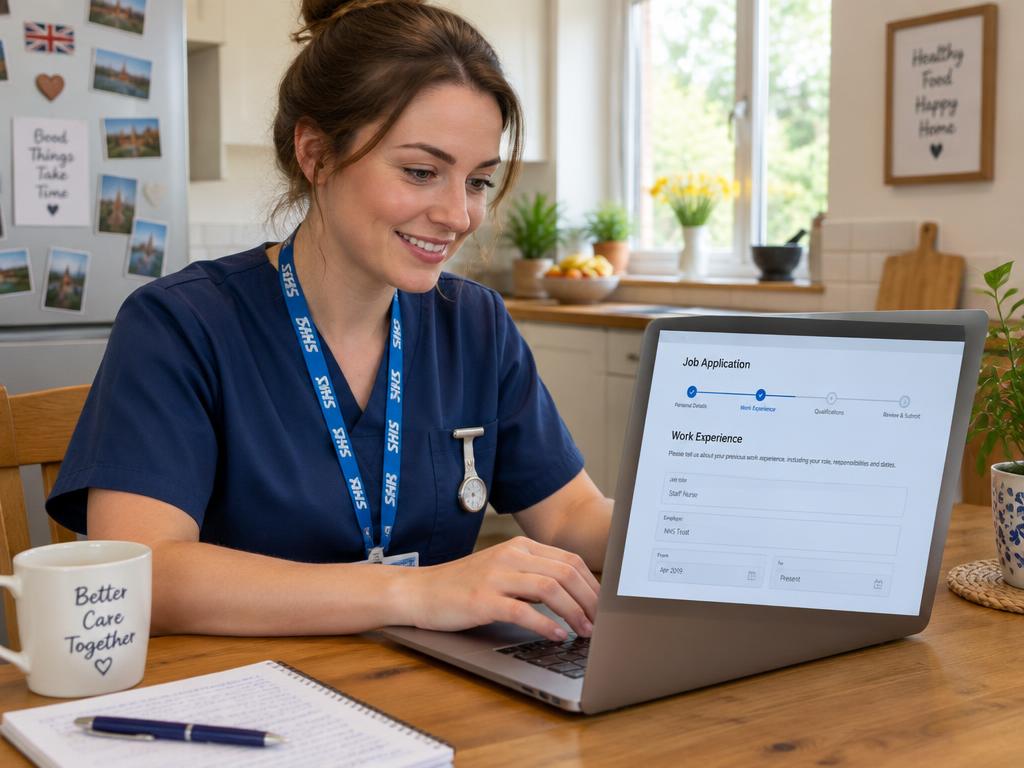
The application process almost always involves completing an online form and writing a detailed supporting statement. This is your opportunity to demonstrate how your skills, qualifications, and experience match the 'essential' and 'desirable' criteria listed in the job's person specification. Your application will be scored against these criteria, so it's vital to address each point directly. Tools like our Application Co-pilot can help you structure your response effectively.
Recruitment in the NHS is values-based, meaning employers are looking for candidates who embody the values of the NHS Constitution, such as compassion, respect, and a commitment to quality of care. Be prepared to provide examples of how you demonstrate these values in your application and at interview.
If you are shortlisted for an interview and are successful, you will be made a conditional offer. This will be subject to a series of pre-employment checks, including references, a DBS check, an occupational health assessment, and verification of your qualifications and right to work. This process can take between 6 and 12 weeks on average.
Key takeaways
- Allied Health Professions (AHPs) are the NHS's third largest clinical workforce, covering 14 distinct and highly skilled roles.
- AHPs are autonomous practitioners central to prevention, diagnosis, treatment, and rehabilitation across all areas of healthcare.
- To become an AHP, you need a specific degree-level qualification and must be registered with the HCPC (or GOsC for osteopaths).
- Careers typically start at Band 5 of the Agenda for Change pay scale, with clear pathways for progression into specialist, advanced, and leadership roles.
- Jobs are advertised on official NHS websites, and the application process focuses on matching your skills to the person specification and demonstrating NHS values.