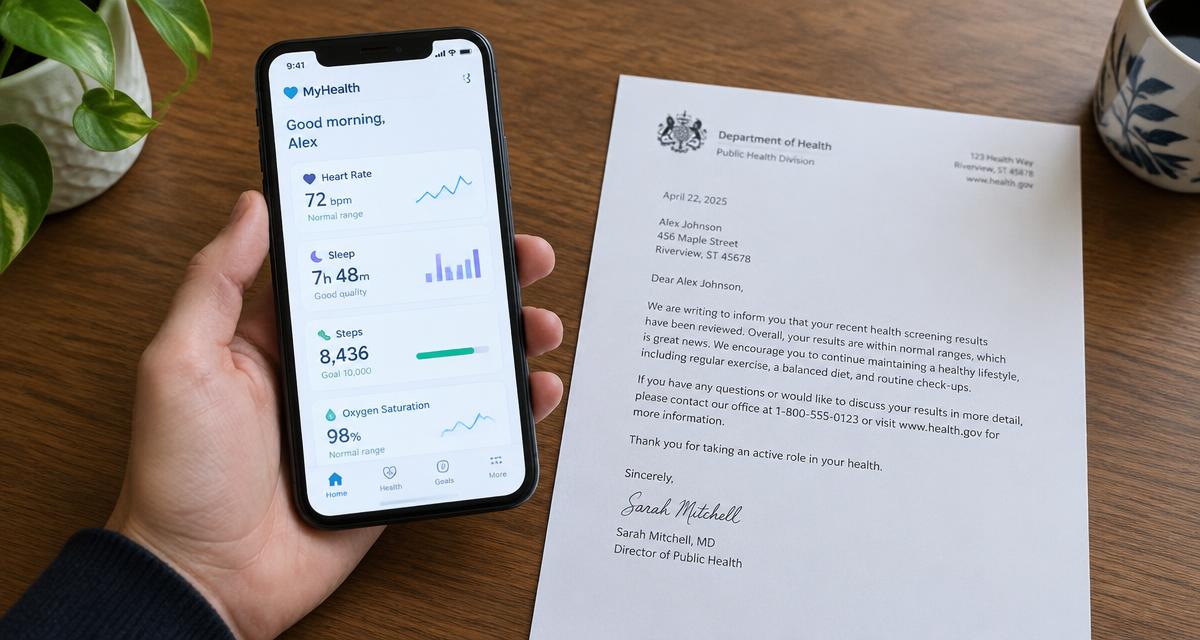
Your NHS number is a unique 10-digit code that helps healthcare staff find your health records. The quickest ways to find it are by checking the NHS App, looking at any recent letters or prescriptions from the NHS, or using the free 'Find your NHS number' service on the official NHS website.
What is an NHS Number and Why Do You Need It?
Think of your NHS number as your lifelong identifier for health and care services in England, Wales, and the Isle of Man. It’s a simple 10-digit number, often formatted like 123 456 7890, which is assigned to you at birth or the first time you register with a GP. Its primary purpose is patient safety; it ensures that you are correctly identified every time you use an NHS service, linking you accurately to your medical records.
This prevents confusion between patients with similar names or dates of birth and ensures that your health information – from allergies and prescriptions to test results and treatment history – is all stored securely in one place. It’s the key that unlocks your health record for the clinicians who need it.
As an NHS staff member or applicant, you’ll encounter requests for your NHS number more often than most. Here’s why it’s so important to have it to hand:
- Pre-employment Health Checks: When you get a conditional offer for an NHS role, you'll need to complete an Occupational Health questionnaire. This form almost always asks for your NHS number. It allows the Occupational Health service to create a record for you or find an existing one, ensuring your workplace health assessments are linked correctly to you.
- Registering with New Services: Whether you’re moving house and registering with a new GP, or being referred to a new hospital department, providing your NHS number makes the process smoother and faster. It allows the new service to quickly and securely retrieve your existing health records.
- Accessing Digital Health Services: To use services like the NHS App or other patient portals, your NHS number is used behind the scenes to verify your identity and pull in your information, such as your vaccination history or current prescriptions.
- General Appointments: While you can still be treated without it, providing your number at a walk-in centre or A&E can speed up your registration process.
Having this number ready can save you time and hassle, especially when you're navigating the administrative side of starting a new job. It’s a small piece of information that plays a huge role in the smooth running of the health service, both for you as a patient and as a professional.
The Quickest Ways to Find Your NHS Number
Misplacing your NHS number is common, especially if you don’t need to use it often. Fortunately, there are several simple and fast ways to retrieve it. You likely have it in several places already without even realising it.
1. On the NHS App
If you have a smartphone and have registered for the NHS App, this is by far the easiest method. Once you log in securely with your fingerprint, face ID, or password, your NHS number is typically displayed right on the home screen. It’s always there, accessible in just a few taps, making it the most convenient digital storage for this vital piece of information.
2. On NHS Documents and Letters
The NHS includes your number on almost all official correspondence as a primary identifier. It’s worth digging out any recent documents you might have filed away. Check these common sources:
- Appointment letters: Any letter from a hospital, clinic, or other NHS service confirming an upcoming appointment will have your NHS number printed on it, usually near your name and address at the top.
- Prescriptions: Look at the green tear-off slip that comes with your medication (the part you keep). Your NHS number is printed on there.
- Test results: If you've received blood test results or screening results through the post, your number will be on the letter.
- Hospital discharge summaries: Any paperwork you were given when leaving hospital will include it.
3. Use the Online 'Find your NHS number' Service
The NHS website has a dedicated, secure service for this exact purpose. It’s a straightforward tool that only takes a couple of minutes to use. You’ll need to provide your name, date of birth, and postcode. The system will then verify your identity and send your NHS number to the mobile phone number or email address registered with your GP surgery. If those details aren't available, it can be posted to your home address.
4. Contact Your GP Surgery
If you can't access any of the methods above, you can always call your GP practice. The reception or administrative team can look up your number for you. Be prepared to answer some security questions to confirm your identity, such as your date of birth and address. While reliable, this method can sometimes take longer than the self-service online options, especially if the phone lines are busy.
Scenario: An Aspiring Nurse Needs Her NHS Number
Let’s look at a realistic situation. Priya, a newly qualified Band 5 nurse, has just accepted her first job offer at a busy teaching hospital. She’s thrilled and is working through the mountain of pre-employment paperwork. One of the most urgent forms is the Occupational Health questionnaire, which has a mandatory field for her NHS number.
Priya has just moved to a new city for the job and all her old paperwork is in boxes. She can’t find any old hospital letters. She remembers having the NHS App on her old phone but hasn't set it up on her new one yet and can't recall the login details.
Feeling a little stuck, she remembers a colleague mentioning an online service. Priya searches for "Find my NHS number" and finds the official NHS website tool. She enters her full name, date of birth, and her postcode. Initially, it fails. She then realises she hasn’t updated her GP with her new address yet. She tries again, this time using her parents’ address where she was previously registered. Success! The system finds her and sends a text message with her 10-digit NHS number straight to her phone. Within five minutes, Priya has the number she needs, completes the form, and submits her paperwork, moving one step closer to her start date. It's a great feeling to tick another item off the to-do list, and she can keep an eye on all her application progress with a tool like an NHS application tracker.
NHS Number vs. National Insurance Number: What's the Difference?
It’s one of the most common administrative mix-ups: confusing the NHS number with the National Insurance (NI) number. Both are unique to you and issued by the government, but they serve entirely different functions. Using the wrong one on a form will cause delays, so it’s crucial to know which is which.
Your NHS Number
- Purpose: Exclusively for healthcare. It identifies you as a patient and links your medical records.
- Format: A 10-digit number (e.g., 485 777 3456).
- Where you find it: On NHS correspondence, prescriptions, or the NHS App.
- Who asks for it: GPs, hospitals, dentists, and other healthcare providers, including NHS Occupational Health departments.
Your National Insurance (NI) Number
- Purpose: For the social security and tax system. It tracks your tax contributions, state pension, and eligibility for certain benefits.
- Format: Two letters, followed by six numbers, and a final letter (e.g., QQ 12 34 56 C).
- Where you find it: On your payslips, P60, P45, or letters from HMRC or the DWP. You can also find it in your personal tax account on the GOV.UK website.
- Who asks for it: Your employer (for payroll), HMRC, and the Department for Work and Pensions (DWP). You'll need it when starting any new job, including in the NHS, so your pay and tax can be processed correctly. If you're curious how your NI contributions affect your salary, a good NHS take-home pay calculator can help break it down.
In short: if it’s about your health, it’s your NHS number. If it’s about your pay, tax, or benefits, it’s your NI number.
Numbers Across the Nations: CHI and Health and Care Numbers
While Staff Portal serves staff across the UK, it’s important to know that the patient identifier system isn't the same everywhere. If you’re working in or moving to Scotland or Northern Ireland, you’ll encounter different terminology.
- England, Wales, and the Isle of Man: All use the 10-digit NHS number. The system is unified, so your number remains the same if you move between England and Wales.
- Scotland: NHS Scotland uses the CHI (Community Health Index) number. It is also a 10-digit unique number that serves the exact same purpose as the NHS number: to identify patients and link their health records. If you move from England to Scotland and register with a GP, you will be assigned a CHI number.
- Northern Ireland: In Northern Ireland, the equivalent is the Health and Care Number (HCN). Again, this is a 10-digit unique identifier used across all health and social care services there.
If you're applying for an NHS job, always use the number that corresponds to the nation where you are currently registered for healthcare. When you move and register with a new GP in a different UK nation, the systems are designed to link your previous health records, ensuring a safe transition of care.
Key takeaways
- Your NHS number is a unique 10-digit code used to identify your health records in England and Wales.
- The quickest ways to find it are on the NHS App, the NHS website’s ‘Find your NHS number’ service, or on recent NHS letters and prescriptions.
- You will almost certainly need your NHS number when completing pre-employment health forms for a new NHS job.
- Your NHS number is completely different from your National Insurance number, which is used for tax, pay, and benefits.
- Scotland uses a CHI number and Northern Ireland uses a Health and Care number, which are equivalent systems.
- If you can't find your number through digital means or on documents, your GP practice can provide it for you after verifying your identity.