What is NHS bank work?
NHS staff banks are the health service's own temporary staffing solution, providing a flexible workforce to cover shifts when needed. Joining a staff bank means you can pick up extra hours at your trust with the benefits of being an NHS employee, like pension eligibility and holiday pay. It offers a way to increase your income, gain wider experience, or simply achieve a better work-life balance.
You can often join the bank in addition to a permanent or ‘substantive’ NHS role, or you can work exclusively on the bank. The process for joining is usually straightforward if you're an existing employee, while external applicants will need to go through a full recruitment process.
How a staff bank works
Think of a staff bank as an internal pool of trusted, flexible workers for a specific NHS trust or health board. When a ward or department is short-staffed due to sickness, holidays, or a vacant post, they first look to the staff bank to find cover. Bank staff can view available shifts—often via an app or online portal—and book themselves in for the ones that suit them.
This system gives trusts a cost-effective and reliable way to maintain safe staffing levels without having to rely solely on expensive external agencies. For staff, it provides a simple way to work flexibly within a familiar environment, using the same systems and working alongside known colleagues.
Some trusts manage their own banks, while many partner with NHS Professionals (NHSP), a company owned by the Department of Health and Social Care, which runs the service on their behalf. In either case, as a bank worker, you are part of the NHS family, not an employee of a private agency.
The pros and cons of bank work
Working on the bank offers a fantastic amount of flexibility, but it's important to weigh the benefits against the potential drawbacks before deciding if it's right for you.
Advantages of joining an NHS bank
- Flexibility: The number one benefit. You choose your working pattern, picking shifts that fit around your family, studies, or other commitments. You are in control of your diary.
- Extra income: It’s an excellent way to supplement your income from a substantive post, helping you save for a holiday, a house deposit, or just manage rising costs.
- Valuable experience: Bank work allows you to try out different wards, specialties, and even different hospital sites within your trust. This can be invaluable for career development, helping you decide where you want to specialise long-term.
- Familiarity and belonging: You work within the same organisation, using the same electronic patient records and following the same policies. You feel like part of the team, which isn't always the case with agency work.
- NHS benefits: You are eligible to join the NHS Pension Scheme for your bank shifts, and you will accrue paid holiday.
- Priority on shifts: Vacant shifts are almost always offered to bank staff before they are released to more expensive external agencies.
Potential disadvantages
- No guarantee of work: The biggest downside is the lack of guaranteed hours. While there are often plenty of shifts available, demand can fluctuate. This can make it a precarious sole source of income if you have fixed monthly outgoings.
- Less job security: As you are not on a permanent contract, you don't have the same level of job security as a substantive member of staff.
- Limited benefits: While you get a pension and holiday pay, you may not be entitled to the same occupational sick pay or other contractual benefits as permanent colleagues. You should always check the trust's specific policy.
- Last-minute requests: You might receive requests to work at very short notice, which can be disruptive if you're not prepared for it.
Pay, holiday and pensions for bank staff
One of the great things about bank work is that your pay and core benefits are managed in a clear and fair way, aligned with permanent staff.
How you get paid
Bank staff are paid on the same Agenda for Change (AfC) pay scales as contracted staff. Your hourly rate will be determined by your band. Crucially, you will also receive the same pay enhancements for working unsocial hours, such as nights, weekends, and public holidays. Your payslip will clearly show your basic pay and any enhancements you have earned.
Accruing holiday pay
Instead of a fixed annual leave allowance, bank staff accrue holiday pay for the hours they work. From April 2024, the standard method for calculating this for irregular hours workers is 12.07% of the hours you work. This is based on the statutory 5.6 weeks of leave. This amount is then paid out to you, usually along with your monthly salary, so you receive payment in lieu of taking the time off.
A worked example
Let's imagine a Band 5 nurse, Chen, works exclusively on the bank. In one pay period, he works a total of 75 hours. 30 of these hours were standard day shifts, 30 were night shifts, and 15 were on a Sunday.
- He would be paid his standard Band 5 hourly rate for all 75 hours.
- He would receive an unsocial hours enhancement for the 30 night hours and the 15 Sunday hours, as set out in the AfC terms.
- He would accrue holiday pay on his total hours worked. This would be 12.07% of 75 hours, which is approximately 9 hours of pay. This amount would be added to his payslip.
- His NHS Pension contributions would be calculated based on his total earnings for that month.
This shows how your earnings can quickly add up, especially if you are able to work unsocial hours. You can model different scenarios using an NHS take-home pay calculator.
NHS Pension Scheme
Every hour you work on the bank is pensionable. You will be automatically enrolled into the highly-regarded NHS Pension Scheme, although you have the right to opt out if you wish. This is a significant benefit and a key advantage over many private sector temporary roles.
How to join an NHS staff bank
The process for joining a bank varies depending on whether you already work for the trust.
For existing (substantive) staff
If you already have a permanent or fixed-term contract with a trust, joining their bank is usually a very simple and quick process. You are already on their payroll and have completed all the necessary pre-employment checks.
Typically, you just need to:
- Find the bank registration form on the trust’s intranet or contact the bank office directly.
- Complete the form, which confirms your details and agreement to the bank terms and conditions.
- Once processed, you’ll be given access to the shift booking system.
This is by far the easiest way to start bank work and allows you to pick up shifts in your own department or explore others.
For external applicants
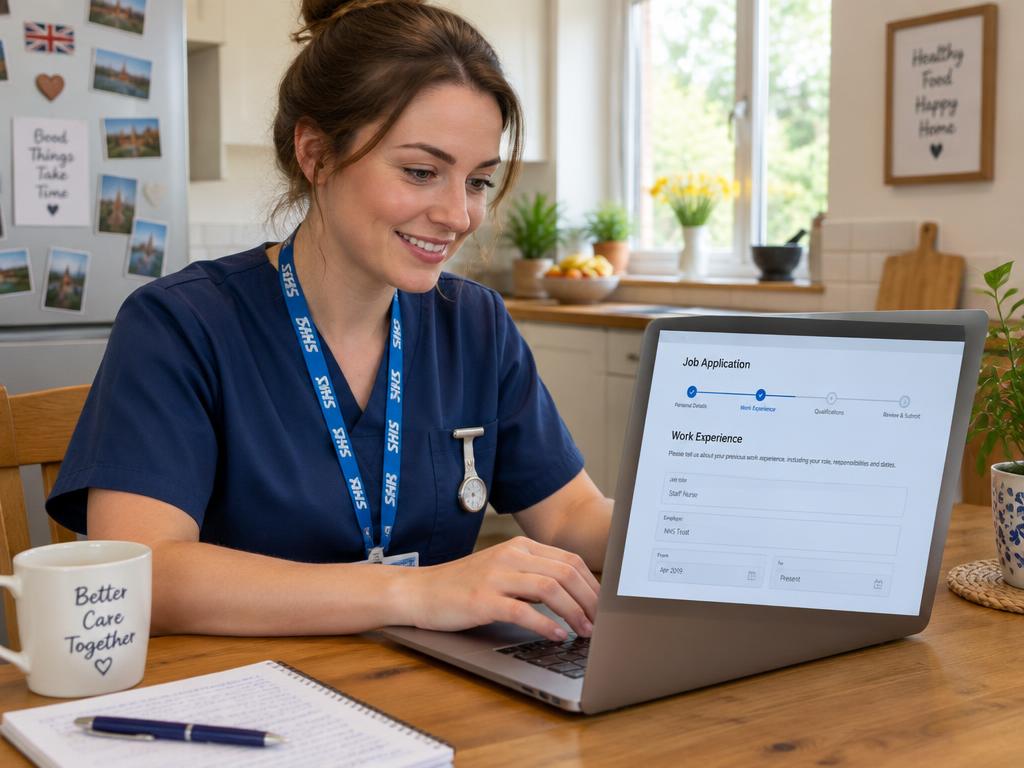
If you don't already work for the trust, you will need to apply to join the bank as an external candidate. This is a formal recruitment process, identical to applying for any other NHS job.
You will need to search for ‘Bank’ vacancies (e.g., ‘Bank Nurse’, ‘Bank Healthcare Assistant’) on sites like NHS Jobs. The application involves an online form and, most importantly, a detailed supporting statement. This statement is your chance to show how your skills and experience match the person specification for the role.
To make this critical part of your application easier, you could use a tool like Staff Portal's application co-pilot to help you structure your thoughts and address each point effectively. Remember that adverts can close early if a high number of applications are received, so it’s best to apply promptly.
The external application and interview process
If you're applying from outside the trust, you'll go through a values-based recruitment process designed to ensure you align with the principles of the NHS Constitution.
The application
After finding a suitable bank vacancy, you'll complete the standard NHS application form, often through a system like Trac Jobs. Pay close attention to the person specification attached to the job description. Your supporting statement must be tailored to this, providing evidence for how you meet each of the essential and desirable criteria. Use concrete examples from your past experience.
The interview
If your application is successfully shortlisted, you will be invited for an interview. This will likely involve a mix of competency-based questions ('Tell me about a time when...') and scenario-based questions designed to assess your clinical skills, judgement, and alignment with NHS values like compassion, respect, and working together for patients.
Pre-employment checks
Following a successful interview and a conditional job offer, the trust will begin comprehensive pre-employment checks. This is a vital part of NHS safe recruitment and can take some time. These checks include:
- Disclosure and Barring Service (DBS) check
- References from previous employers covering a set period
- An occupational health screening
- Verification of your identity and right to work in the UK
- Confirmation of your professional registration and qualifications
The time from interview to your first shift can typically be anywhere from 6 to 12 weeks, largely depending on how quickly these checks can be completed.
Key takeaways
- An NHS staff bank is a trust's internal pool of flexible workers who cover vacant shifts.
- It offers excellent flexibility, extra income, and opportunities to gain wider experience.
- Bank work is not agency work; you are employed by the trust and are eligible for the NHS Pension Scheme and pro-rata holiday pay.
- Pay is based on standard Agenda for Change rates, including enhancements for unsocial hours.
- Hours are not guaranteed, which can make it unsuitable as a sole source of income for some.
- Existing NHS staff can usually join their trust's bank via a simple internal process.
- External applicants must go through a full NHS recruitment process, including an application, interview, and extensive pre-employment checks.