When do you need a cover letter for an NHS job?
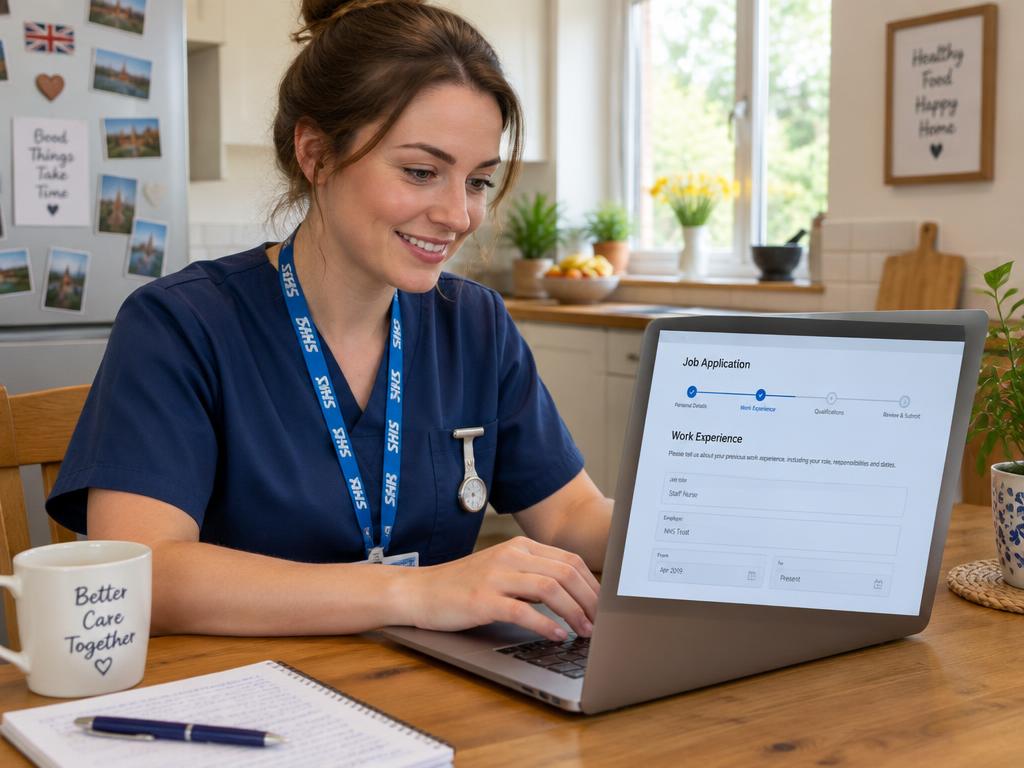
Most jobs in the NHS are advertised on dedicated portals like NHS Jobs, and the application process is highly standardised. Instead of a traditional cover letter, you’ll be asked to complete a detailed application form which includes a ‘supporting information’ or ‘supporting statement’ section. This is where you provide a comprehensive account of how you meet the criteria in the person specification, and it’s this statement that gets scored by the shortlisting panel.
So, for the majority of applications you make through NHS Jobs or a trust's recruitment system like Trac, you will not need a separate cover letter. The system simply doesn't have a place for it. However, there are a few important exceptions where a well-crafted cover letter is essential:
- Speculative applications: If you're approaching a department manager or team lead directly to enquire about potential vacancies that aren't advertised, a cover letter is your formal introduction.
- Direct applications: Some roles, particularly very senior (e.g., Director level) or certain corporate positions, may be advertised on platforms like LinkedIn or specialist job boards and ask for a CV and cover letter to be emailed directly.
- Applying to the staff bank: When sending your CV to a trust’s temporary staffing or bank office, a brief cover letter can help explain your availability and areas of expertise.
- When specifically requested: Occasionally, an advert on NHS Jobs might ask you to email a CV in addition to, or instead of, the standard form. In this case, your email acts as the cover letter.
In these situations, your cover letter is the first impression you make. It’s your chance to introduce yourself professionally, express your interest, and persuade the reader that your attached CV is worth their time.
The purpose of an NHS cover letter
When you do need to write one, it's crucial to understand that a cover letter is not just a summary of your CV. It has a distinct and strategic purpose. Think of it as the handshake and introduction before you present the detailed evidence in your CV or application.
A successful cover letter should:
- Introduce you and your intent: Clearly state who you are and why you are writing (e.g., applying for a specific advertised role or making a speculative enquiry).
- Grab the reader’s attention: A hiring manager might receive dozens of applications. Your letter needs to quickly highlight why you are a strong candidate worth considering.
- Showcase your most relevant skills: Pick two or three of your most compelling skills or achievements from your career that directly align with the needs of the role or department.
- Demonstrate genuine interest: It should prove you haven't just sent a generic letter to fifty different managers. It must show you have researched their specific department, trust, and its challenges or successes.
- Reflect NHS values: Your letter is an early opportunity to show that your personal and professional values align with those of the NHS Constitution, such as a commitment to quality of care, compassion, and working together for patients.
How to structure your cover letter
A clear, professional structure makes your letter easy to read and digest. Stick to a conventional format and keep it to a single page of A4.
Contact Information and Date
At the top right of the page, include your full name, address, email address, and phone number. Below this, on the left, write the full date.
Recipient’s Details
Next, also on the left, add the recipient's details. Try your best to find a specific person to address it to—the job advert often names the hiring manager. If not, a little research on the trust’s website can often reveal the name of the Head of Department or Clinical Lead. Addressing it to a named individual is far more effective than a generic ‘To Whom It May Concern’.
The Opening (Paragraph 1)
Start with a formal salutation, like ‘Dear Dr Evans’ or ‘Dear Ms Patel’. In your first sentence, get straight to the point. State the full job title you are applying for and where you saw it advertised. If it's a speculative application, clearly state your purpose, for example, “I am writing to express my keen interest in any upcoming Band 6 Community Nurse vacancies within your team.”
Why You Are a Great Fit (Paragraph 2)
This is the heart of your letter. Don't just list your skills. Instead, select two key requirements from the person specification and provide a brief, powerful example of how you meet them. Connect your experience to the tangible needs of the service. For instance, instead of saying “I have experience in audits,” you could write, “In my previous role, I led a clinical audit on patient waiting times which resulted in a 15% improvement in clinic efficiency, demonstrating my commitment to improving lives and ensuring everyone counts.”
Why This Trust or Department? (Paragraph 3)
This paragraph shows you’ve done your homework and are genuinely invested in this specific opportunity. What is it about this particular organisation that attracts you? Mention something specific: perhaps their recent ‘Outstanding’ CQC rating in one area, their reputation for staff development and training, a specific service they pioneer, or how their stated trust values resonate with your own professional ethos.
The Closing (Paragraph 4)
End on a positive and proactive note. Reiterate your enthusiasm for the role and the organisation. Politely state that you have attached your CV for their consideration and that you are available for an interview at their convenience. If you are preparing for a formal process, our Interview Pack can help you get ready for the next stage.
Sign-off
Finish with a professional closing. Use ‘Yours sincerely’ if you addressed the letter to a named person, and ‘Yours faithfully’ if you used a generic title like ‘Dear Hiring Manager’. Leave a space for your signature (if sending a hard copy) and then type your full name.
NHS cover letter example: a worked scenario
Let's imagine a scenario: a newly qualified Children's Nurse is applying for her first Band 5 post. The job advert on NHS Jobs uses the standard application form, but it also provides the email address of the ward manager and encourages interested candidates to get in touch for an informal chat or to send a CV directly. The nurse decides to email her CV with a cover letter to make a strong first impression.
Here is what her cover letter might look like:
[Your Name]
[Your Address]
[Your Phone Number]
[Your Email Address]
[Date]
Matron Jane Smith
Ward Manager, Neptune Children's Ward
St James's University Hospital
Beckett Street
Leeds, LS9 7TF
Dear Matron Smith,
I am writing to apply for the Band 5 Staff Nurse position on the Neptune Children's Ward, which I saw advertised on NHS Jobs (Ref: 123-ABC-456). Having recently completed my final student placement within the Leeds Teaching Hospitals NHS Trust, I am incredibly eager to begin my qualified career in an organisation renowned for its commitment to quality of care and patient-centred services.
During my training, I gained extensive experience in paediatric assessment, medication management, and providing family-centred care in high-pressure environments. On my most recent placement on a busy surgical ward, I was commended for my compassion and communication skills when supporting a family through their child's complex post-operative recovery. I am passionate about the NHS value of 'working together for patients' and believe my ability to build rapport quickly with children and their parents would allow me to contribute positively to the Neptune Ward team from day one.
I was particularly drawn to this role because of St James's reputation as a regional centre for paediatric oncology, an area I have a strong clinical interest in. I have been following the trust’s work in developing new care pathways for young people undergoing treatment and would be thrilled to have the opportunity to learn from and contribute to such a forward-thinking and dedicated team.
Thank you for considering my application. My CV is attached for your review, and it provides further detail on my clinical placements and skills. I am confident that I have the dedication, clinical aptitude, and compassionate nature to excel in this role and would welcome the opportunity to discuss my application with you at an interview.
Yours sincerely,
[Your Typed Name]
Tips for making your letter stand out
- Always tailor it: Never send a generic letter. Every single letter you write must be unique to the job and trust you're applying to. Name the specific role and reference the specific organisation.
- Mirror the person specification: Just like a supporting statement, the person spec is your blueprint. Pick out the key skills and values they are looking for and use similar language in your letter.
- Show, don't just tell: Back up your claims with evidence. Instead of saying “I am a good team player,” provide a brief example: “I collaborated with a multidisciplinary team of therapists and social workers to develop a safe and effective discharge plan for a child with complex needs.”
- Keep it concise and professional: Stick to one page. Use a clear, professional font (like Arial, Calibri, or Times New Roman) in size 10 or 11. Use short paragraphs and check your formatting.
- Proofread, then proofread again: Errors in spelling or grammar can create an impression of carelessness, which is the last thing you want in a healthcare setting. Read your letter aloud to catch awkward phrasing, and if possible, ask a friend or colleague to check it for you.
How is this different from a supporting statement?
It's vital not to confuse the two. They serve very different functions in your NHS job hunt.
The Cover Letter is a brief, one-page introduction. It's a marketing document designed to pique a manager's interest and encourage them to read your CV. It highlights your key strengths but doesn't go into exhaustive detail.
The Supporting Statement is the main part of your application through NHS Jobs. It is a detailed, factual document where you must systematically provide evidence for how you meet every single criterion listed in the person specification. This is the document that is formally scored by the shortlisting panel to decide who gets an interview. Writing a strong one is critical, which is why tools like our Application Co-pilot can be so valuable in helping you structure your evidence effectively.
Your primary focus for most NHS applications should be on perfecting your supporting statement. The cover letter is a supplementary tool for those specific circumstances where the standard application process doesn't apply.
Key takeaways
- Most NHS jobs advertised on NHS Jobs require a detailed supporting statement, not a cover letter.
- A cover letter is essential for speculative applications, direct approaches to managers, or when an advert specifically asks for a CV and letter.
- Your cover letter should be a concise, one-page document that introduces you and highlights your most relevant skills.
- Always tailor your letter to the specific job and trust, showing you have done your research.
- The structure should be formal: your details, the date, recipient's details, an opening, a 'why you' paragraph, a 'why them' paragraph, and a professional closing.
- Demonstrate how you meet key criteria from the person specification and how your ethos aligns with the core NHS values.
- Proofread meticulously to ensure it is free from any errors before you send it.