Do I need a cover letter for an NHS job?
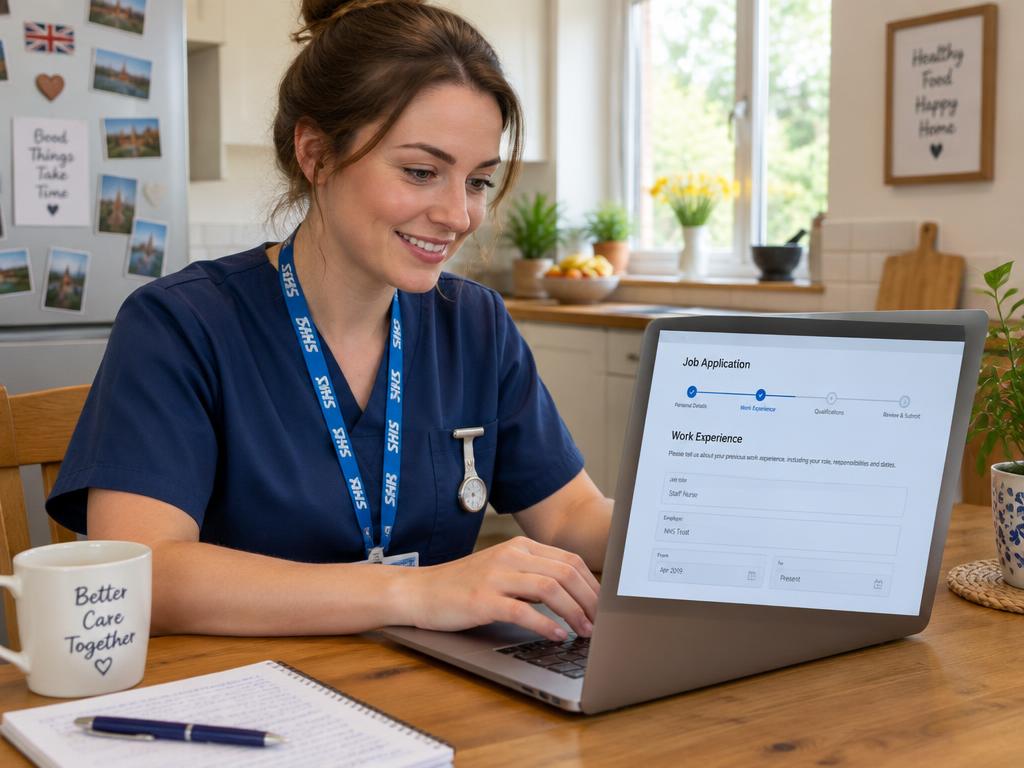
While a cover letter is essential in many sectors, the standard NHS recruitment process is a little different. Most jobs in England and Wales are advertised on the NHS Jobs site, with Scotland using Jobtrain and Northern Ireland using HSC Jobs. These online applications don't usually have a field for a traditional cover letter.
Instead, you'll find a large text box labelled 'Supporting Information' or 'Supporting Statement'. This is where you make your case for the job. It serves the same purpose as a cover letter but is often much more detailed. It is your single most important opportunity to show a recruiter how you meet the criteria for the role.
So, when might you need an actual cover letter?
- Speculative applications: If you're writing to a department manager to ask about potential bank work or unadvertised vacancies, a cover letter is the perfect introduction.
- Direct applications: Some senior, specialised, or academic NHS roles may ask you to apply directly via email with a CV, in which case a cover letter is expected.
- When specifically requested: Although rare, a job advert might explicitly ask for a cover letter. Always follow the instructions.
Even if you're filling out the supporting information section, the principles of writing a great cover letter still apply. You need to be persuasive, provide evidence, and tailor your writing to the specific job.
The golden rule: Address the person specification
Every NHS job advert is accompanied by two key documents: a job description (what the job involves) and a person specification (what skills and experience you need to do it). Your application will be scored, point by point, against the criteria in the person specification.
The person specification is usually split into 'Essential' and 'Desirable' criteria. To be shortlisted for an interview, you must demonstrate how you meet all the essential criteria. Addressing the desirable criteria will make your application even stronger.
Your cover letter or supporting statement must act as a direct response to this document. The biggest mistake applicants make is writing a generic statement that doesn't reference the specific requirements of the role.
A simple and effective approach is to structure your writing around the person specification. Go through it line by line and write a short paragraph or a few bullet points providing evidence for how you meet each requirement. For a complex application, our Application Copilot can be a huge help in structuring your thoughts and ensuring you cover every point.
What to include in your NHS cover letter
A well-structured letter shows professionalism and makes it easy for the hiring manager to see your value. Stick to a clear, logical format that is no more than one side of A4 paper.
Introduction
Start by stating the full job title and reference number you are applying for. Briefly say where you saw the job advertised. Express your genuine enthusiasm for the role and the organisation. Keep it to one short paragraph.
Main body (2-3 paragraphs)
This is the core of your letter. Use these paragraphs to provide compelling evidence that you are the right person for the job. Refer directly to the person specification and use specific examples from your experience.
For each key skill or requirement, use the STAR method to structure your examples:
- Situation: Briefly describe the context.
- Task: Explain what was required of you.
- Action: Detail the specific steps you took.
- Result: Describe the positive outcome of your actions.
This is also your chance to show you align with the NHS values: working together for patients; respect and dignity; commitment to quality of care; compassion; improving lives; and everyone counts. Don't just list them; weave them into your examples to show how you live these values in your work.
Why this Trust?
In one paragraph, show you've done your research. Explain why you want to work for this specific NHS Trust or department. Mention something that impresses you – perhaps their CQC rating, a specific service they pioneer, their commitment to staff development, or how their stated values align with your own.
Conclusion
End your letter on a positive and professional note. Reiterate your strong interest in the role and your confidence in your ability to succeed. State your availability for an interview and thank the hiring manager for their time and consideration.
NHS cover letter examples
The best way to understand is to see it in action. Below are some condensed examples for different roles. Use them as inspiration, but remember to always write your own unique letter based on your experience and the specific job you're applying for.
Example 1: Newly Qualified Nurse (Band 5)
Fatima is applying for her first Staff Nurse role on a Respiratory ward. She has placement experience but no paid nursing experience yet.
Dear Hiring Manager,
Re: Band 5 Staff Nurse (Respiratory), Ref: RESP-123
I am writing to express my enthusiastic interest in the Band 5 Staff Nurse position on the Respiratory ward at City Hospital, which I saw advertised on NHS Jobs. As a newly qualified nurse with a passion for respiratory care, developed during my final university placement, I am confident that my clinical skills, compassionate nature, and commitment to quality care align perfectly with the requirements of this role and the values of your Trust.
During my 12-week placement on an acute medical ward, I gained hands-on experience in managing patients with a range of respiratory conditions, including COPD and asthma. I was responsible for administering medications, including nebulisers and inhalers, conducting regular observations, and escalating concerns using the NEWS2 scoring system. I worked collaboratively with the multidisciplinary team to develop and review patient care plans, always ensuring the patient and their family were treated with dignity and respect. My mentor consistently praised my ability to build rapport with patients and my proactive approach to learning.
I was particularly drawn to City Hospital because of its recent investment in a new specialist respiratory support unit, which demonstrates a clear commitment to improving lives. I am eager to contribute my skills to your team and to begin my nursing career in an environment dedicated to excellence and patient-centred care.
Thank you for considering my application. I have attached my full supporting statement and look forward to the possibility of an interview.
Yours sincerely,
Fatima Ahmed
Example 2: Healthcare Assistant (no direct experience)
David has a background in retail but wants to move into healthcare. He's applying for a Band 2 HCA role.
Dear Hiring Manager,
Re: Band 2 Healthcare Assistant, Ref: HCA-GEN-456
I am writing to apply for the Healthcare Assistant role at your Trust, as advertised on NHS Jobs. While my professional background is in customer service, my ambition is to build a career in healthcare, and I am passionate about providing compassionate care and support to patients. I have developed strong communication and teamwork skills that I am confident are directly transferable to the demands of a busy ward environment.
In my previous role as a retail team leader, I was responsible for assisting members of the public, including elderly and vulnerable customers, often in stressful situations. I learned to listen carefully, respond with empathy, and solve problems calmly and efficiently. I am a reliable and hardworking individual, dedicated to working together with a team to achieve the best results. I understand the importance of dignity and respect in care, and I am extremely keen to undertake all the necessary training to provide excellent support to the nursing staff and patients.
I want to work for your Trust because of your strong reputation for staff development and your commitment to the community. I am eager to learn and to contribute to your team's goal of providing the highest quality of care for every patient.
Thank you for your time. I am very excited about the opportunity to discuss how my skills and positive attitude can benefit your ward.
Yours sincerely,
David Chen
Common mistakes to avoid
A simple error can undermine an otherwise strong application. Double-check your letter to ensure you haven't made any of these common mistakes:
- It's too generic. If your letter could be sent to any hospital for any job, it's not tailored enough. Mention the specific role and Trust.
- It ignores the person specification. This is the single biggest reason applications are rejected at the scoring stage. Address the criteria directly.
- It's full of typos. Grammatical errors and spelling mistakes suggest a lack of care and attention to detail. Proofread it, then ask someone else to read it too.
- It's too long. A cover letter should be a concise summary. Keep it to one page. Save the exhaustive detail for the supporting information section.
- It focuses on what you want. Frame your letter around what you can offer the Trust and its patients, not just what you hope to get from the job.
- It uses the wrong tone. Avoid being overly casual or overly formal. Aim for a professional, warm, and direct voice.
- It has incorrect details. Check and double-check the job title, reference number, and your own contact information.
Key takeaways
- Most NHS applications require a detailed 'Supporting Information' statement rather than a traditional cover letter, but the principles are the same.
- Your primary goal is to prove you meet the 'Essential' and 'Desirable' criteria listed in the person specification.
- Structure your letter clearly with an introduction, a main body providing evidence, a paragraph on why you want to work for that specific Trust, and a professional conclusion.
- Use the STAR method (Situation, Task, Action, Result) to give concrete examples of your skills and experience.
- Show how your personal and professional conduct aligns with the six core values of the NHS Constitution.
- Always tailor your letter to the specific role and organisation – a generic application is easily spotted and dismissed.
- Proofread your letter carefully to eliminate any typos or grammatical errors before you submit it.