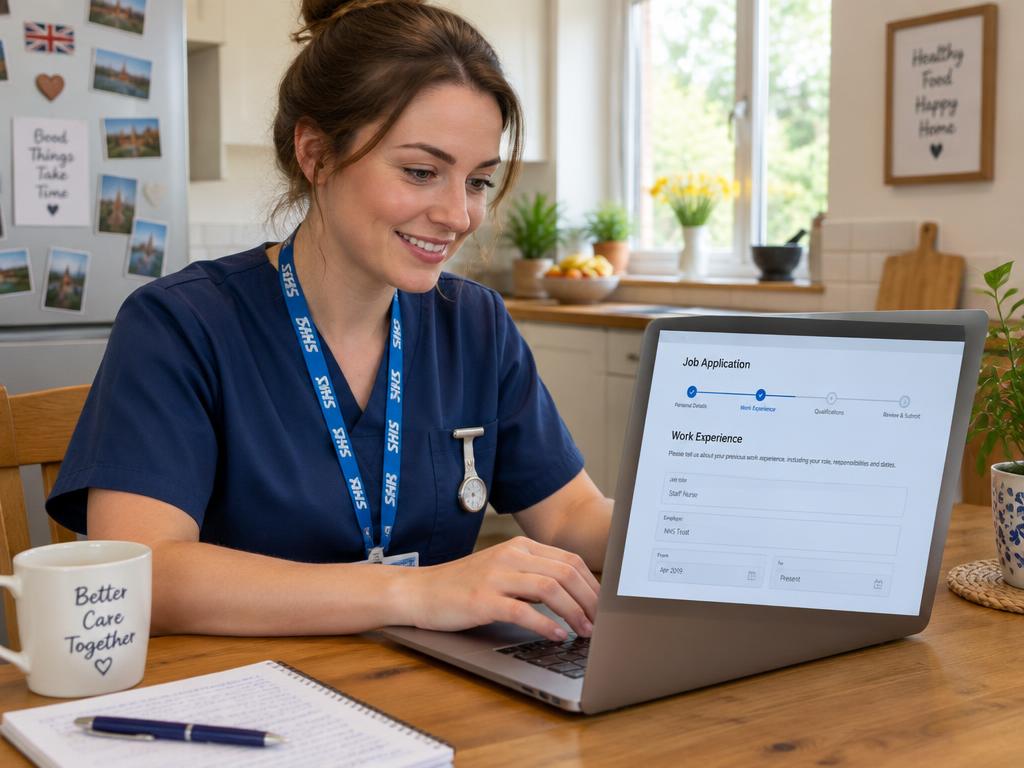
Getting Started with Your NHS Scotland Job Search
Finding and securing a role with NHS Scotland involves using its dedicated recruitment website, tailoring your application to a specific set of criteria, and demonstrating your alignment with its core values. The process is thorough, but by understanding each stage, you can give yourself the best possible chance of success.
Where to Find NHS Scotland Vacancies
Unlike NHS England and Wales, which primarily use the NHS Jobs website, NHS Scotland has its own central recruitment portal. All vacancies for Scotland’s 14 territorial health boards and its various national boards (like the Scottish Ambulance Service or NHS 24) are advertised on the official NHS Scotland Recruitment website. This site is powered by a system called Job Train, which you may see mentioned in the application process.
You can search for jobs by keyword, location, health board, or job family. It’s a good idea to create an account so you can set up email alerts for roles that match your criteria. Given the high demand for many NHS positions, this ensures you’ll be among the first to know when a suitable job is posted.
A key tip is to act quickly. Job adverts in the NHS often state that they may close early if a high volume of applications is received. If you see a role you’re interested in, don’t wait until the closing date to start your application.
Decoding the Job Advert and Person Specification
When you find a promising vacancy, you’ll see two key documents attached: the Job Description and the Person Specification. While the job description tells you what the role involves, the person specification is the most important document for your application.
The person specification is a checklist of the skills, qualifications, experience, and attributes the hiring manager is looking for. It’s split into two categories:
- Essential Criteria: These are the absolute must-haves. You will not be shortlisted for an interview unless your application demonstrates that you meet every single one of these points.
- Desirable Criteria: These are the “nice-to-haves.” They are used to distinguish between candidates who all meet the essential criteria. The more of these you can meet, the stronger your application will be.
Your entire application, particularly the supporting statement, will be scored against the person specification. Treat it as your blueprint for what to write.
Crafting a Standout Application
The NHS Scotland application is a detailed online form covering your personal details, education, and employment history. However, the section that requires the most attention is the supporting statement (it may be called “Assessment” or have a similar title). This is your opportunity to prove you are the right person for the job.
Do not simply upload a generic CV. Instead, use this space to systematically address each point on the person specification. A highly effective method is to use the criteria as subheadings and write a short paragraph for each, providing specific evidence of how you meet it. For experience- or skills-based criteria, use the STAR method to structure your examples:
- Situation: Briefly describe the context.
- Task: Explain what you needed to achieve.
- Action: Detail the specific steps you took.
- Result: Describe the positive outcome of your actions.
Throughout your examples, you should also aim to reflect NHS Scotland’s core values: care and compassion; dignity and respect; openness, honesty and responsibility; and quality and teamwork. Show, don’t just tell. Instead of saying “I am a compassionate person,” describe a situation where you demonstrated compassion towards a patient or colleague.
A Worked Example
Let's imagine a healthcare support worker is applying for a Band 3 role. An essential criterion on the person specification is “Ability to work effectively as part of a team.”
In their supporting statement, they could write:
“In my previous role on a busy elderly care ward (Situation), we were often short-staffed, and the team needed to work together efficiently to ensure all patient needs were met (Task). I took the initiative to proactively check in with the nurses and other support workers during my shift, asking where I could best provide assistance, whether it was helping with patient mobility, answering call bells, or stocking supplies (Action). This collaborative approach helped reduce the pressure on my colleagues and contributed to the smooth running of the ward, ensuring patient care was never compromised and we consistently received positive feedback in team meetings (Result).”
This detailed, real-world example is far more powerful than a simple statement like “I have good teamwork skills.” If you need help structuring your statement, our Application Co-pilot can guide you through the process of matching your experience to the person specification.
The Values-Based Interview
If your application is shortlisted, you’ll be invited to an interview. This is most often a panel interview conducted by two or three people, including the hiring manager. It may be in person or held virtually via a platform like Microsoft Teams.
NHS Scotland, like other UK health services, uses values-based recruitment. This means the interviewers are looking for more than just your technical skills; they want to know if your personal values and behaviours align with those of the organisation. Expect questions that ask you to provide examples of how you have demonstrated qualities like compassion, teamwork, and integrity.
Prepare for the interview by reviewing the person specification and your application. Think of several strong examples from your career that showcase your skills and align with NHS Scotland’s values. Practice articulating them using the STAR method.
Typical questions might include:
- “Tell us about a time you had to deal with a distressed patient or relative. What did you do?” (Tests compassion, dignity and respect)
- “Describe a situation where you made a mistake. How did you handle it?” (Tests openness, honesty and responsibility)
- “Give an example of a time you worked with others to improve the quality of care.” (Tests quality and teamwork)
At the end of the interview, you’ll be asked if you have any questions. Always have one or two prepared. Asking thoughtful questions about the team, the role’s challenges, or opportunities for development shows you are genuinely interested and engaged.
After the Offer: Pre-Employment Checks
If you are successful at the interview, you will receive a conditional job offer. This means the job is yours, provided you pass a series of mandatory pre-employment checks. This is often the longest part of the process, so be prepared for a bit of a wait.
The checks are managed by the health board’s recruitment team and typically include:
- Criminal Record Check: For any role involving regulated work with children or protected adults, you will need to complete a Protecting Vulnerable Groups (PVG) scheme check, which is run by Disclosure Scotland. This is Scotland’s equivalent of the DBS check in England and Wales.
- References: You’ll need to provide details for referees covering your last three years of employment or study. They will be contacted to confirm your role and conduct.
- Occupational Health: A health questionnaire and sometimes a telephone consultation to ensure you are fit to undertake the role and to arrange any necessary support or adjustments.
- Right to Work: Verification of your eligibility to work in the UK.
- Identity and Qualification Checks: You will need to provide original documents to prove your identity and the qualifications listed on your application.
From the point of your interview to your first day, the process can take anywhere from six to twelve weeks, and sometimes longer, depending on how quickly the checks are completed. You can use a tool like our NHS Application Tracker to keep all your documents and dates in one place. Once all checks are cleared, you’ll receive your unconditional offer and a confirmed start date.
Key takeaways
- All NHS Scotland jobs are advertised on the official NHS Scotland Recruitment website, not the NHS Jobs site used in England.
- Your application will be scored directly against the essential and desirable criteria in the person specification.
- The supporting statement is the most important part of your application; use it to provide specific evidence for each point on the person specification.
- Interviews are values-based, so prepare examples that demonstrate how you embody NHS Scotland’s values of compassion, respect, honesty, and teamwork.
- The criminal record check required for patient-facing roles is the PVG scheme, managed by Disclosure Scotland.
- Be patient during pre-employment checks, as it can take 6-12 weeks from your interview to receive a final start date.