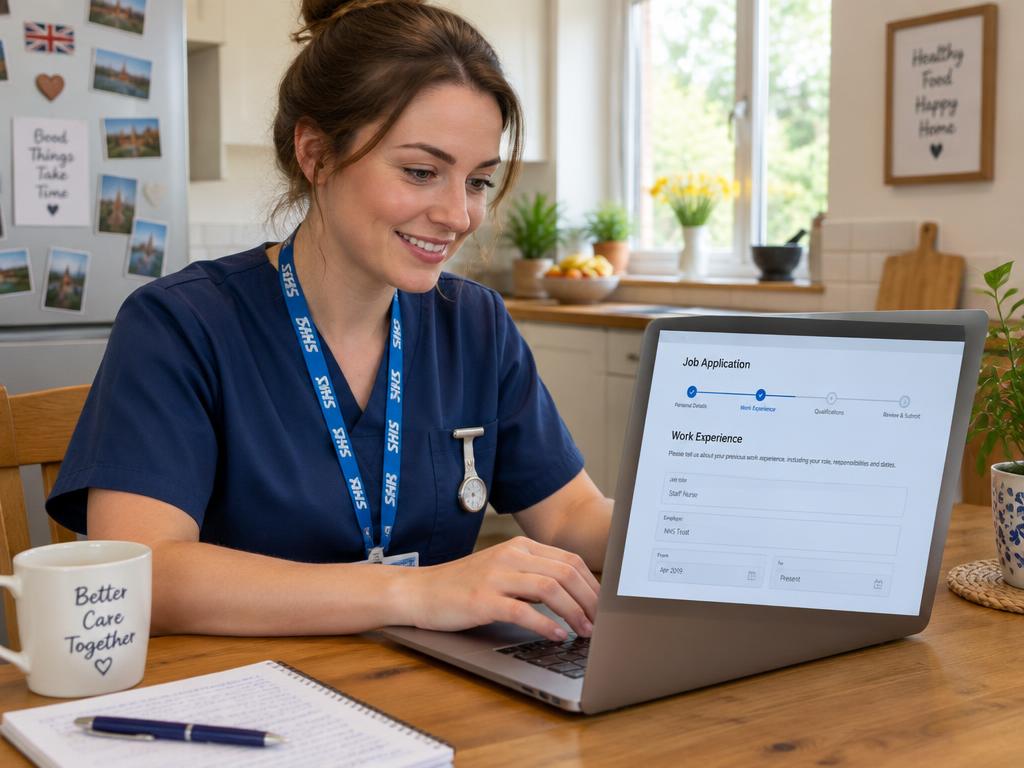
Getting the notification that your application status on Trac Jobs has changed to 'shortlisted' is a brilliant feeling. It means your application has impressed the hiring manager enough to want to meet you. This guide walks you through what happens next, from the interview invitation to your first day on the job.
What 'Shortlisted' Really Means
When you submit an application for an NHS role, it isn't just glanced at. A recruiting manager, often the person who would be your line manager, or a small panel meticulously scores your application. They compare the information in your supporting statement against the 'essential' and 'desirable' criteria listed in the person specification for the role.
Each criterion gets a score. To be shortlisted, your application needs to meet all the essential criteria and achieve a high enough overall score to make it into the group of candidates invited for an interview. In short, it’s confirmation that, on paper, you are a strong contender for the job.
This is a significant achievement. Many NHS jobs receive a high volume of applications and may even close early if they hit a certain number. Getting through this initial filtering stage means you’ve already stood out from the crowd.
From Shortlist to Interview Invitation
Once the shortlisting is complete, the recruitment team will begin organising the next stage, which is almost always an interview. Here’s what to expect:
- The Invitation: You will typically receive an invitation via the Trac system and an accompanying email. Always check your junk or spam folder, as automated emails can sometimes end up there.
- The Details: The invitation will contain all the crucial information you need, such as the date, time, and location of the interview. It will specify if it's in-person or a virtual interview on a platform like Microsoft Teams or Zoom.
- The Format: It should also give you an idea of the format. This could be a standard panel interview, a Multiple Mini Interview (MMI) common in clinical roles, or an assessment centre involving tasks, tests or a presentation.
- Responding: The email will ask you to log in to Trac to accept or decline the interview slot. It’s vital to do this promptly. This is also your opportunity to request any reasonable adjustments you might need for the interview process.
Don't be alarmed if you don't hear anything for a week or two after being shortlisted. NHS recruitment teams are extremely busy, and coordinating diaries for an interview panel can take time.
How to Prepare for Your NHS Interview
Your interview is your chance to bring your application to life. Solid preparation is the best way to calm your nerves and perform at your best. Focus your energy on these key areas.
First, revisit the job description, the person specification, and your own application. The interview questions will be directly linked to these documents. Be ready to give real-world examples that prove you have the skills and experience they’re looking for.
Next, research the Trust or organisation. Go beyond their main website. Look at their latest Care Quality Commission (CQC) report, read their annual strategy, and check their social media for recent news or campaigns. Think about how the role you’ve applied for contributes to their wider goals.
NHS recruitment is values-based, built on the principles in the NHS Constitution. Be prepared for questions designed to see how your personal values align with these core principles:
- Working together for patients
- Respect and dignity
- Commitment to quality of care
- Compassion
- Improving lives
- Everyone counts
Think of specific examples from your career where you have demonstrated these values. Use the STAR technique (Situation, Task, Action, Result) to structure your answers clearly and effectively. Finally, prepare a few thoughtful questions to ask the panel at the end. This shows you are genuinely interested and engaged.
For a complete guide to question types and preparation strategies, our NHS Interview Pack can give you an extra layer of confidence.
After the Interview: The Conditional Offer
The panel will usually tell you when you can expect to hear back. This could be later the same day or might take up to a week. If you're the successful candidate, you'll likely receive a phone call with a verbal offer, followed by a formal 'conditional offer of employment' letter via Trac and email.
'Conditional' is the key word here. The job is yours, provided you successfully complete a series of mandatory pre-employment checks. Do not resign from your current job until these are all complete and you have an unconditional offer.
If you aren't successful this time, it's natural to feel disappointed. However, it's crucial to ask for feedback. The hiring manager’s comments can be incredibly valuable, highlighting areas where you were strong and where you could improve for your next interview. Sometimes, you may be placed on a 'reserve list', meaning if the first-choice candidate declines the offer, it may be offered to you.
You can keep track of all your applications, interviews and their outcomes using a simple tool like our NHS Application Tracker.
Navigating Pre-Employment Checks
The pre-employment checking stage can be the longest part of the entire process. The time it takes can vary widely depending on the checks required and how quickly you and your referees respond. The goal is to ensure every new NHS employee is safe, qualified, and suitable for their role.
Typical checks include:
- References: The NHS will usually require references covering your last three years of employment or training. Contact your referees in advance to let them know a request will be coming.
- DBS Check: A Disclosure and Barring Service check (formerly CRB) is required for most NHS roles to check for criminal records. The level of check depends on the role.
- Occupational Health: A health questionnaire and sometimes a telephone or in-person assessment to ensure you are fit for the role and to identify any support you might need.
- Right to Work: A check to verify you have the legal right to work in the UK.
- ID and Address Verification: You'll need to provide documents like your passport, driving licence, and utility bills.
- Qualification Certificates: You must provide original certificates for any qualifications listed as essential in the person specification.
Your main task during this phase is to respond to any requests for information as quickly as possible. Most documents can be uploaded directly via the Trac portal. Delays often happen when candidates take a long time to provide information or when referees are slow to respond.
A Realistic Timeline: An Example
Let's consider a realistic scenario. A Band 5 nurse working 30 hours a week applies for a new community nursing role.
- Week 1: Application shortlisted. Interview invitation received for Week 3.
- Week 3: Attends interview. Receives a verbal offer two days later, followed by a conditional offer letter on Trac.
- Week 4: Completes and submits forms for DBS and Occupational Health. Provides referee details and uploads ID documents.
- Week 5-8: The waiting period. The DBS check is processed. The Occupational Health team reviews the form and requests a follow-up call. The Trust chases one of the referees who has been slow to respond.
- Week 9: All checks are finally marked as complete in Trac.
- Week 10: An unconditional offer and contract are issued. The nurse accepts and agrees on a start date in 8 weeks, honouring their notice period.
In this example, the total time from interview to receiving the unconditional offer was seven weeks. The total time from interview to starting the new job will be fifteen weeks. The typical 6-12 week period from interview to start date is an average; it can be quicker, but it can also be significantly longer.
From Unconditional Offer to Your First Day
Receiving your unconditional offer and contract is the final green light. This is the time to formally resign from your current role. Read your contract carefully before you sign and return it.
In the weeks leading up to your start date, your new department or the recruitment team should be in touch with information about your first day, details of your induction, and any arrangements for uniform or IT equipment.
As you prepare to start your new role, it can be helpful to plan your finances, especially if your pay point, pay date, or working hours are changing. You can get a clear picture of your new net salary using an NHS take-home pay calculator.
Key takeaways
- Being shortlisted means you’ve successfully proven on paper that you meet the essential criteria for the role.
- The next step is an interview. Thoroughly prepare by reviewing the job description, researching the Trust, and preparing examples for values-based questions.
- If you receive a conditional offer, do not resign from your current job until all pre-employment checks are complete.
- Respond to all requests for information for your checks as quickly as possible to prevent delays.
- The process from interview to start date often takes 6-12 weeks, and sometimes longer. Patience is key.
- If you're unsuccessful, always ask for feedback to help you improve for next time.