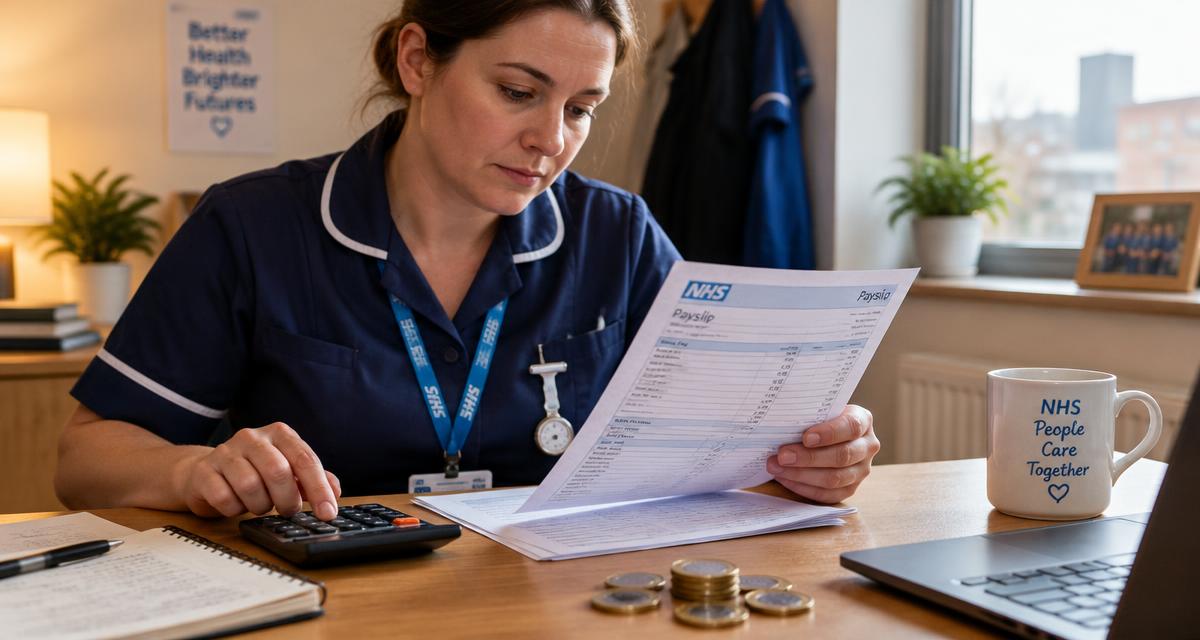
The government has announced a 3.6% consolidated pay rise for NHS staff on Agenda for Change (AfC) contracts in England for the 2025/26 financial year. The increase is effective from 1 April 2025 and will be paid to staff from August 2025, with pay backdated to cover the months from April.
In this article, we’ll break down what this means for you, covering the new pay scales, how your take-home pay is affected, and when you can expect to see the extra money in your bank account.
What is the 2025/26 pay award?
Following recommendations from the NHS Pay Review Body, it was confirmed in May 2025 that over a million NHS staff on AfC contracts in England will receive a 3.6% pay increase for the year 2025/26.
This is a consolidated award, which is important because it means the increase is permanent and is applied to your basic salary. This has a knock-on effect on other parts of your earnings, including:
- Overtime payments
- Unsocial hours and shift enhancements
- On-call allowances
- Pension contributions and future benefits
Essentially, any part of your pay that is calculated as a percentage of your basic salary will also increase. This differs from a non-consolidated award, or a one-off payment, which doesn't affect your underlying pay rate.
It’s worth noting that other staff groups have separate arrangements. For example, resident doctors received a different award of 5.4% plus a £750 consolidated payment for the same period. This article focuses specifically on the Agenda for Change award.
When will I receive the pay rise and my back pay?
Although the pay rise is effective from 1 April 2025, it takes time for NHS payroll systems to be updated. The new pay rates will be implemented from August 2025.
This means that in your August payslip, you will not only be paid at your new, higher salary, but you will also receive back pay. This back pay is a lump sum covering the difference between your old pay rate and the new one for the months of April, May, June, and July.
Your August payslip will look a bit different than usual. You should see a separate line item for the back-dated pay award. Remember that this lump sum is taxable, and you will pay National Insurance and pension contributions on it, just as you would with your normal salary.
It’s always a good idea to check your payslip carefully in August to ensure your new pay rate has been applied correctly and that your back pay has been calculated as you expected. If you have any questions, your first port of call should be your trust’s payroll department or your union representative.
New Agenda for Change pay scales for 2025/26
The 3.6% increase applies to all Agenda for Change pay bands and their incremental pay points. Below is a table showing the new salaries for a full-time (37.5 hours per week) member of staff from 1 April 2025.
For bands with pay progression, your salary depends on how many years of experience you have in that band. For example, a newly qualified nurse starting in Band 5 will be on the entry point, while a colleague with three years of experience will be on the second pay point.
| Band | Pay Point / Experience | New Salary (2025/26) |
|---|---|---|
| Band 2 | All points | £24,465 |
| Band 3 | Entry | £24,937 |
| 2+ years | £26,598 | |
| Band 4 | Entry | £27,485 |
| 3+ years | £30,162 | |
| Band 5 | Entry | £29,970 |
| 2+ years | £32,324 | |
| 4+ years | £36,483 | |
| Band 6 | Entry | £37,338 |
| 2+ years | £39,405 | |
| 5+ years | £44,962 | |
| Band 7 | Entry | £46,148 |
| 2+ years | £48,526 | |
| 5+ years | £52,809 | |
| Band 8a | All points | £53,755 - £60,504 |
| Band 8b | All points | £62,215 - £72,293 |
| Band 8c | All points | £74,290 - £85,601 |
| Band 8d | All points | £88,168 - £101,677 |
| Band 9 | All points | £105,385 - £121,271 |
How this affects your take-home pay: a worked example
It's important to remember the 3.6% figure applies to your gross salary, not the amount that lands in your bank account. Let’s look at a quick example.
Meet Ben, a physiotherapist with two years of experience, working full time in Band 6.
Before the pay rise, Ben was on a salary of approximately £38,035. After the 3.6% increase, his new salary is £39,405. This is an annual gross increase of £1,370, or around £114 per month.
However, Ben won't see an extra £114 in his take-home pay. From that amount, he will have to pay income tax, National Insurance, and pension contributions. The actual increase in his net pay will be lower, depending on his individual circumstances.
To see how the pay rise will affect your specific salary, you can use our NHS take-home pay calculator. Simply enter your new salary details to get a personalised estimate.
What does the pay rise mean for part-time staff?
If you work part-time, you will receive the exact same 3.6% pay rise. The increase is applied to the full-time equivalent (FTE) salary for your role, and your pro-rata salary is adjusted accordingly.
For example, a Band 5 nurse with over four years' experience working 30 hours a week (0.8 FTE) would see their pro-rata salary calculation change as follows:
- Full-time salary: Rises from approx. £35,215 to £36,483.
- Their pro-rata salary (0.8 of FTE): Rises from approx. £28,172 to £29,186.
Just like for full-time staff, this increase will also apply to any enhancements and will be pensionable. Your back pay will also be calculated on a pro-rata basis.
Thinking about your next NHS career move?
A pay rise is always welcome, but it can also be a good moment to think about your longer-term career goals. Seeing the new pay scales might make you consider whether now is the right time to aim for a promotion to the next band.
Moving from the top of Band 5 (£36,483) to the entry point of Band 6 (£37,338) might seem like a small jump initially, but the potential for future earnings at the top of Band 6 (£44,962) is significantly higher. Promotion opens up new responsibilities and opportunities for professional growth.
If you're thinking about applying for a new role, you'll need a strong application that highlights your skills and experience. Your supporting statement is crucial for getting shortlisted. Our Application Co-pilot tool can help you write a compelling personal statement tailored to the NHS job you want.
Making sure your CV is up-to-date and professionally presented is also key, whether you're applying for an internal promotion or a role at a different trust. A tool like our Pro CV builder can help you create a CV that stands out to recruiters.
Key takeaways
- NHS staff on Agenda for Change contracts in England receive a 3.6% consolidated pay rise for 2025/26.
- The increase is effective from 1 April 2025.
- You will receive the new pay rate and back pay from your August 2025 payslip.
- The rise applies to basic pay, which means overtime, enhancements, and pension contributions will also increase.
- Part-time staff receive the same 3.6% increase on their pro-rata salary.
- Always check your August payslip carefully and contact your payroll team or union if you have any questions.