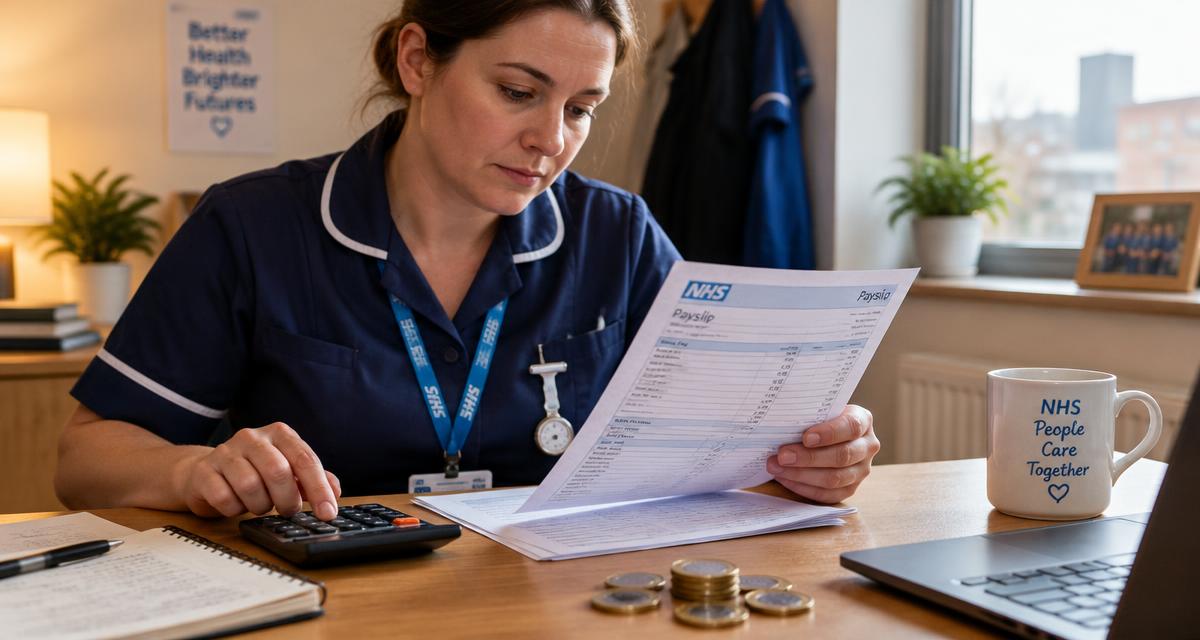
The NHS pay award for the 2026 to 2027 financial year has not yet been decided. The final figure will be determined by the government following recommendations from the NHS Pay Review Body (PRB), with an announcement typically expected in the summer of 2026. Any award is usually backdated to the start of the financial year on 1st April.
While we don't have a crystal ball, we can look at the established process, recent pay awards, and the economic climate to understand what to expect. This guide breaks down how the decision is made, the timeline to watch, and what it could mean for your take-home pay.
How NHS Pay is Decided: The Pay Review Body Process
The annual pay rise for NHS staff on Agenda for Change (AfC) contracts in England isn't plucked out of thin air. It's the result of a long, formal process led by the independent NHS Pay Review Body (PRB).
Here’s how it generally works:
- Evidence Gathering: The PRB invites and considers evidence from key stakeholders. This includes trade unions (like the RCN, Unison, and GMB), who represent staff interests; NHS Employers, who represent the management view; and government departments, who outline the economic context and affordability.
- Consideration: The PRB weighs all this evidence against a range of factors. These include the cost of living and inflation, recruitment and retention challenges across the NHS, staff morale, and the government's overall public sector pay policy.
- Recommendation: Based on its findings, the PRB writes a detailed report with a specific recommendation for the percentage pay increase for the upcoming financial year. This report is submitted confidentially to the government, usually in the spring.
- Final Decision: The government then considers the PRB's recommendation. While they often accept it, they are not bound to. The final decision rests with the government, which then makes a public announcement.
It's worth noting that health is a devolved matter, so Scotland, Wales, and Northern Ireland run their own pay negotiation processes. While they often align with the situation in England, the final awards can differ.
A Look Back: Recent NHS Pay Awards
To get a sense of where things might be heading, it's helpful to look at the pay awards from the last few years. These figures provide important context, reflecting the economic pressures and industrial relations climate of their time.
- 2023/24: A 5% consolidated increase, plus two one-off, non-consolidated payments for most staff. This award followed a period of significant industrial action.
- 2024/25: A 5.5% consolidated increase.
- 2025/26: A 3.6% consolidated increase.
The trend shows a gradual decrease from the post-pandemic highs, which largely tracked the fall in the headline rate of inflation. The negotiations and debates for 2026/27 will undoubtedly be influenced by where inflation and the cost of living stand as the PRB begins its work.
The Foundation: Understanding the 2025/26 Pay Scales
Any pay rise for 2026/27 will be an uplift applied to the pay scales for 2025/26. These figures, effective from 1st April 2025, are the baseline from which the next increase will be calculated. Understanding where you sit on your band is key to figuring out what a future rise means for you.
Below is a summary of the annual salaries for a full-time (37.5 hours per week) member of staff on some of the main Agenda for Change bands for 2025/26.
| Band | 2025/26 Annual Salary (£) |
|---|---|
| Band 2 | £24,465 |
| Band 3 | £24,937 - £26,598 |
| Band 4 | £27,485 - £30,162 |
| Band 5 | £29,970 - £36,483 |
| Band 6 | £37,338 - £44,962 |
| Band 7 | £46,148 - £52,809 |
| Band 8a | £53,755 - £60,504 |
For precise figures relating to your specific pay point and circumstances, always check your payslip or consult the official NHS Employers pay circulars.
Key Factors That Will Shape the 2026/27 Award
When the PRB begins its evidence-gathering process for the 2026/27 award, several key factors will be at the forefront of discussions. These are the arguments that unions, employers, and the government will be making to influence the final recommendation.
- Inflation: The rate of inflation (both CPI and RPI) is a crucial benchmark. Unions will argue for an above-inflation award to ensure pay packets don't lose value in real terms, while the government will point to falling inflation as a reason for restraint.
- Recruitment and Retention: The ability of the NHS to attract and keep staff is a major consideration. If vacancy rates are high and staff are leaving for better-paid jobs elsewhere, the argument for a more generous pay rise to remain competitive becomes stronger.
- Staff Morale and Productivity: Evidence around workforce morale, stress levels, and the ability to meet patient demand will be presented to demonstrate the pressure the system is under.
- Economic Climate: The overall health of the UK economy and the government's fiscal policy will set the boundaries for what is deemed 'affordable'. This includes comparing NHS pay to settlements in the wider public and private sectors.
- Union Campaigns: Trade unions will launch their own pay campaigns, surveying their members to establish a claim for a specific percentage increase. This figure will form the basis of their submission to the PRB.
What a Pay Rise Might Mean for You: A Worked Example
It can be hard to visualise what a percentage increase means for your actual pay. Let’s take a simple, hypothetical example.
Imagine a Band 5 nurse who has been in the role for over four years, placing them at the top of their band. Based on the 2025/26 pay scales, their basic full-time annual salary is £36,483.
If the 2026/27 pay award was, for example, 3%, the calculation for their new basic salary would be:
£36,483 x 1.03 = £37,577.49
This would represent an annual increase of £1,094.49 before tax, National Insurance, and pension contributions. If they work part-time, the increase would be applied to their pro-rata salary.
Remember, this 3% figure is purely for illustration. The actual award could be higher or lower. To see how a potential pay rise could affect your monthly earnings after deductions, you can model different scenarios using an NHS take-home pay calculator.
The Annual Pay Timetable: When to Expect News
The NHS pay cycle follows a predictable annual pattern. While dates can shift slightly, the general timeline is consistent.
- Autumn/Winter (2025): The government issues a remit letter to the PRB, formally asking it to begin its work. Stakeholders like unions and employers are invited to submit their evidence.
- Winter/Spring (2026): The PRB analyses all the evidence and holds meetings with stakeholders to clarify points. It then formulates its recommendation.
- Spring/Early Summer (2026): The PRB submits its final report to the government.
- Summer (2026): The government considers the report and announces its decision. This most often happens in July.
- Summer/Autumn (2026): If the announcement comes after 1st April, the pay rise is backdated. Payroll departments in NHS trusts work to implement the new pay scales, with the increase and any back-pay typically appearing in the August or September payslip.
Beyond the Annual Rise: Boosting Your Earnings
While the annual pay award is important, the most significant way to increase your earnings in the NHS is through career progression. Moving up just one pay band can result in a much larger salary jump than a typical cost-of-living increase.
If you're thinking about your next step, whether it's seeking a promotion to a higher band or moving into a new specialism, preparation is everything. A strong application is your first chance to make a great impression.
Focus on tailoring your supporting statement to the person specification, highlighting the skills and experience that make you the perfect candidate. For help crafting compelling evidence against each requirement, tools like our supporting statement writer can be a huge help. Once you secure an interview, thorough preparation will give you the confidence to shine. Our NHS Interview Pack is designed to help you anticipate questions and structure your answers effectively.
Key takeaways
- The NHS pay rise for 2026/27 has not been decided and is unlikely to be announced until summer 2026.
- The final figure is set by the government, following a recommendation from the independent NHS Pay Review Body (PRB).
- The award will be influenced by factors like inflation, the economy, NHS staffing levels, and evidence from trade unions.
- Recent pay awards were 5% (2023/24), 5.5% (2024/25), and 3.6% (2025/26).
- Any award for 2026/27 will be an increase on the 2025/26 pay scales and will be backdated to 1st April 2026.
- You can find official updates on the websites of NHS Employers, gov.uk, and your trade union.