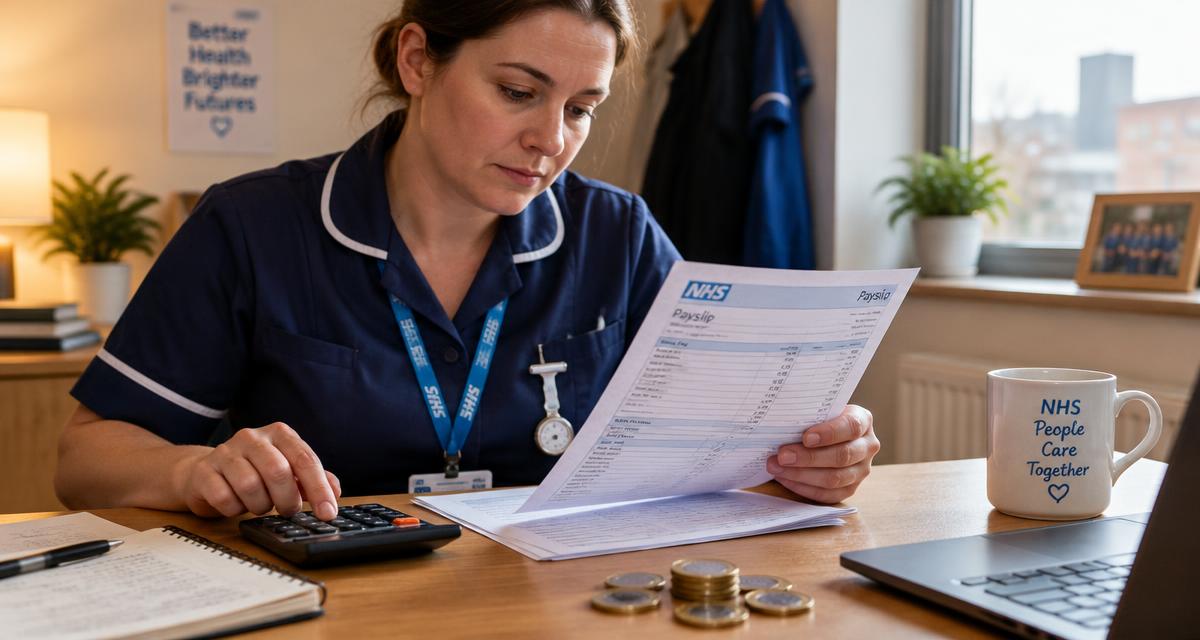
The 2026/27 pay award for NHS Wales staff on Agenda for Change (AfC) contracts has not yet been decided. The process involves a recommendation from the independent NHS Pay Review Body (PRB), followed by a final decision from the Welsh Government. Any resulting pay uplift is expected to be backdated to 1 April 2026.
How NHS pay is decided in Wales
Understanding how your pay is set each year can feel complicated, but the process follows a fairly regular pattern. Because health is a devolved matter, the Senedd and Welsh Government have the final say on the budget for NHS Wales, including staff pay.
The annual cycle begins with the NHS Pay Review Body (PRB). This is an independent group that reviews evidence from a wide range of organisations, including:
- Trade unions like the Royal College of Nursing (RCN), UNISON, and the GMB.
- NHS Employers, representing the management side.
- Government departments from Wales, England, and Northern Ireland.
The PRB considers factors like inflation, the cost of living, the wider economy, and the NHS's ability to recruit and retain staff. After gathering all this evidence, it produces a report with recommendations for the year's pay award. This report is sent to the governments of the UK nations.
The UK Government usually makes the first move, announcing what the award will be for NHS England. The Welsh Government then considers the PRB's report and the situation in Wales before making its own, separate decision for NHS Wales staff. While the decision in Wales often mirrors the PRB's headline recommendation, it doesn't have to. The Welsh Government can, and sometimes does, choose a different path based on its own priorities and budget.
A key policy in Wales is the commitment to the Real Living Wage. This means that if the lowest AfC pay point falls below the independently calculated Real Living Wage rate, the Welsh Government tops it up to ensure no staff member earns less. This provides a crucial pay floor for the lowest-paid staff.
When will the 2026/27 pay award be announced?
There is no fixed date for the pay award announcement, but we can look at previous years to get a good idea of the timeline. The PRB typically gathers its evidence over the winter of 2025 and into early 2026. It then deliberates and writes its report, which is usually submitted to ministers in the spring.
After that, it's a waiting game. Governments take time to consider the recommendations before making a public announcement. This often happens in the summer, anywhere from June to August.
The important thing to remember is that the pay award, whatever it may be, will apply from the start of the financial year: 1 April 2026. Because the announcement comes several months later, your pay rise will be backdated. This means you’ll receive a lump sum in your pay packet covering the difference for April, May, June, and any other months that have passed. Your new, higher rate of pay will then apply from that point forward.
What factors will influence the 2026/27 award?
The PRB and Welsh Government will weigh several competing factors when deciding on the 2026/27 pay award. The final figure will be a balance between what is affordable and what is needed to support the workforce.
Key considerations include:
- Inflation: The rate of inflation (both CPI and RPI) is a major factor. Unions will argue that any award must at least match the rising cost of living to prevent a real-terms pay cut.
- The economic outlook: The overall health of the UK and Welsh economies, as well as government finances, will play a huge role. The Treasury sets the overall spending envelope, which can constrain the options available.
- Recruitment and retention: The PRB will hear extensive evidence on staffing gaps across NHS Wales. A fair pay award is seen as a vital tool for attracting new people and persuading experienced staff to stay.
- Staff morale: Evidence about workload, pressure, and the general feeling among the workforce is also considered. Pay is a key part of feeling valued.
- Pay comparability: The PRB looks at how NHS pay compares to similar roles in the private and wider public sectors.
Trade unions will make a strong case for a restorative pay rise that addresses what they see as years of pay erosion, while government and employer bodies will focus on affordability and the need to balance spending on pay with other frontline services.
A look at recent pay awards and indicative salaries
To give some context, it’s helpful to look at the pay awards from previous years. These are the headline figures that were applied to the Agenda for Change pay scales:
- 2023/24: A 5% consolidated increase, plus two one-off, non-consolidated payments.
- 2024/25: A 5.5% consolidated increase (this figure is based on wider reporting and should be checked for your specific circumstances).
- 2025/26: The award for NHS England was set at 3.6%. The Welsh Government will make its own decision for NHS Wales.
While we await the confirmed pay scales for Wales, the table below shows the pay bands for NHS England from 1 April 2025. These figures are for illustration only to give you a rough idea of the salary levels associated with each band. The final figures for Wales will be published by the Welsh Government after its decision is made.
Indicative Agenda for Change Pay Bands (NHS England, 2025/26)
| Band | Indicative Salary Range |
|---|---|
| Band 2 | £24,465 |
| Band 3 | £24,937 - £26,598 |
| Band 4 | £27,485 - £30,162 |
| Band 5 | £29,970 - £36,483 |
| Band 6 | £37,338 - £44,962 |
| Band 7 | £46,148 - £52,809 |
| Band 8a | £53,755 - £60,504 |
| Band 8b | £62,215 - £72,293 |
| Band 8c | £74,290 - £85,601 |
| Band 8d | £88,168 - £101,677 |
| Band 9 | £105,385 - £121,271 |
Note: These are basic pay figures for a full-time role (37.5 hours). They do not include enhancements for unsocial hours, overtime, or other allowances.
Worked example: How a pay rise might affect you
Let's imagine a scenario to see how a pay rise works in practice. Meet Rhys, a Band 6 Occupational Therapist with three years of experience, working full-time in a hospital in Swansea.
Based on the indicative 2025/26 scales for England, his basic salary would be on the second spine point for Band 6, which is £39,405 per year. Now, let's assume for the sake of example that the 2026/27 pay award for Wales is a hypothetical 3%.
To calculate his new basic salary, we'd do:
£39,405 x 1.03 = £40,587.15 per year.
This would be his new basic pay before tax, National Insurance, and pension contributions are deducted. It also doesn't account for any pay progression he might be due. If he was due to move up to the top of Band 6 in the same year, his pay would increase to the new, uplifted top spine point.
To see how a pay rise could affect your specific net pay, you can use an online NHS take-home pay calculator once the award is confirmed. You just need to enter your band, spine point, and pension details to see an estimate of your monthly pay packet.
Planning your next career move
The annual pay cycle is a good time to reflect on your career and consider your next steps. Moving up a pay band is the most significant way to increase your earnings in the NHS. If you're thinking about applying for a promotion, it pays to be prepared.
A strong application is crucial. Your supporting statement needs to clearly match your skills and experience to the person specification for the role. This is where you demonstrate to the hiring manager that you're the right person for the job. If you find this part challenging, our Application Co-pilot can help you structure your thoughts and write a powerful statement.
If your application is successful, the next hurdle is the interview. NHS interviews are often competency-based, requiring you to provide specific examples from your career. Preparing for these questions in advance is the key to success. Our NHS Interview Pack is full of common questions and expert advice to help you feel confident and ready.
Key takeaways
- The NHS Wales pay award for 2026/27 has not been decided yet. An announcement is expected in summer 2026.
- The Welsh Government makes the final decision for staff in Wales, based on recommendations from the independent NHS Pay Review Body (PRB).
- Any pay increase will be backdated to 1 April 2026, with arrears paid as a lump sum.
- The decision will be influenced by inflation, the economy, and NHS staffing challenges.
- Wales is committed to the Real Living Wage, which provides a minimum pay level for the lowest-paid staff.
- For the most accurate and up-to-date information, always check official sources like the Welsh Government, NHS Employers, or your trade union once the announcement is made.