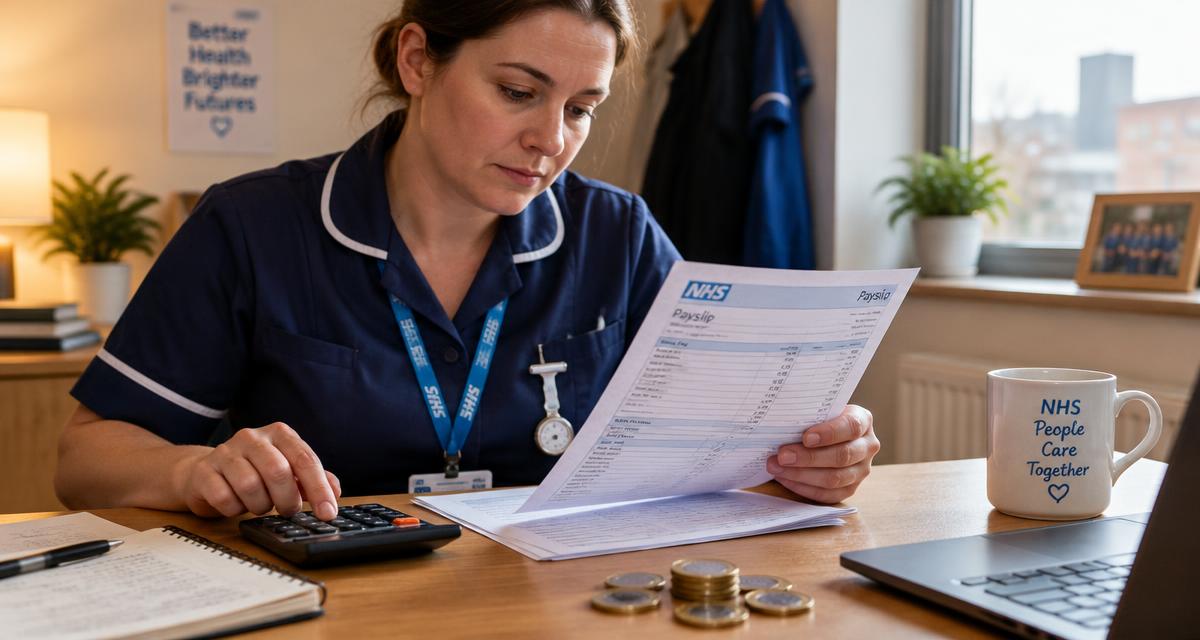
Yes, it is almost certain that any pay rise awarded to NHS staff on Agenda for Change (AfC) contracts for 2026/27 will be backdated to 1 April 2026. This has been the standard procedure for many years, as the process of deciding and implementing the award always takes several months. This means you will receive a lump sum in a future payslip to cover the difference for the months you were paid at the old rate.
How the NHS pay award is decided
Understanding why backdating is necessary starts with understanding how the annual pay rise comes about. It’s not a simple, quick decision. The process involves several key stages and organisations, which is why it stretches well beyond the 1 April start of the pay year.
The central player is the NHS Pay Review Body (PRB). This is an independent body that advises the government on pay for all staff on AfC contracts. Each year, the PRB undertakes a detailed process of evidence gathering. They invite submissions from key stakeholders, including:
- The government (specifically the Department of Health and Social Care)
- NHS Employers (representing the management side of the NHS)
- NHS trade unions (such as the Royal College of Nursing, UNISON, and others, representing staff)
These organisations provide detailed reports and data on a range of factors. The PRB considers economic data like inflation rates (CPI/RPI), the state of the wider economy, and wage growth in the public and private sectors. They also analyse crucial NHS-specific issues such as staff morale, vacancy rates, and the challenges of recruiting and retaining a skilled workforce. The government’s view on affordability is a major consideration.
After weighing all this evidence, the PRB writes a detailed report containing its recommendation for the pay award. This report is submitted to the government, usually in late spring or early summer. The government then considers the recommendation and makes the final decision. It can choose to accept the PRB’s figure, impose a different one, or enter further negotiations. This entire cycle means the final announcement is rarely made before July.
Why backdating is essential
The NHS financial and pay year runs from 1 April to 31 March. Ideally, any pay rise would be agreed upon and ready to implement from 1 April, the first day of the new pay year. However, as explained above, the comprehensive review process makes this impossible.
By the time the government announces its decision in, for example, July, staff will have already been paid for April, May, and June at the previous year's pay rate. Without backdating, they would miss out on the increased pay for these months.
Backdating ensures fairness. It guarantees that the pay award applies to the entire financial year it’s intended for, right from the start date of 1 April. It corrects the administrative delay, ensuring you receive the full value of the pay rise you are entitled to for the whole year.
When you can expect to receive your back pay
The timeline from the government's announcement to the money landing in your bank account involves a few more steps. Once the pay award is officially confirmed, the new pay scales have to be loaded into the complex payroll systems used by NHS trusts and organisations across the country.
This implementation takes time. Payroll departments need to process the changes for hundreds of thousands of employees, each with different pay points, contract hours, and deduction scenarios. Typically, it takes one to two months for this work to be completed.
If the announcement is made in July, you can usually expect to see the back pay appear in your August or September payslip. In some years, it has been as late as October. The payment will appear as a single lump sum, often labelled as 'Arrears' or 'Back Pay'. From that month onwards, your basic salary will be paid at the new, higher rate.
How your back pay is calculated: A worked example
The calculation is straightforward: it’s the difference between your old pay rate and your new pay rate, multiplied by the number of months the delay has lasted. The amount will be pro-rated for part-time staff.
Let's imagine a realistic, though purely hypothetical, scenario. The actual 2026/27 pay award is unknown, but we can use an example to see how it works.
Scenario:
- Employee: A Band 5 nurse with over four years of experience.
- Hours: Full-time (37.5 hours per week).
- 2025/26 Salary: Based on the confirmed scales, their salary from 1 April 2025 is £36,483 per year. This works out to £3,040.25 per month.
- Hypothetical 2026/27 Award: Let's assume a 3% pay rise is awarded.
Calculation:
- New Annual Salary: £36,483 x 1.03 = £37,577.49
- New Monthly Salary: £37,577.49 / 12 = £3,131.46
- Monthly Difference: £3,131.46 - £3,040.25 = £91.21
Now, let's say the pay rise is announced in July and first paid in the September payslip. The back pay needs to cover the five months from April to August.
- Total Back Pay: 5 months x £91.21 = £456.05
In their September payslip, this nurse would receive their new monthly salary of £3,131.46 plus the back pay lump sum of £456.05, before any deductions.
It’s important to remember this is just an illustration. The final percentage of the award makes a big difference. For an accurate idea of what your new salary might look like, you can use our NHS Take-Home Pay Calculator once the new pay scales are announced.
How tax, pensions, and other deductions are affected
Receiving a lump sum can make your payslip look quite different for that month. It’s important to understand how it’s treated for tax and other deductions.
Tax and National Insurance
The back pay amount is treated as normal income. It is added to your regular salary for the month in which it is paid. This combined, higher figure is then used to calculate your tax and National Insurance (NI) contributions for that single pay period.
Because your earnings for that month will be significantly higher, you will pay more tax and NI than usual. It might even temporarily push your earnings for that month into a higher tax bracket (e.g., the 40% rate). While this can be a surprise, remember that your overall tax liability is calculated across the whole tax year. Your tax code should ensure that you pay the correct amount of tax annually, but it does mean a larger slice will be taken from that specific payslip.
Pension Contributions
The pay rise and the backdated amount are fully pensionable. This is great news for your long-term financial health. Pension contributions will be deducted from the lump sum payment, and the increased salary will mean higher contributions going forward. This increases the value of your pension pot over time.
Student Loan Repayments
If you are repaying a student loan, your repayments are calculated as a percentage of your earnings above a certain threshold. As your earnings will be higher in the month you receive your back pay, your student loan deduction for that month will also be higher.
Looking back: recent NHS pay awards
To give some context to the 2026/27 process, it can be helpful to look at the awards from recent years. This history shows a pattern of negotiations, delays, and backdating.
| Pay Year | Award Details (England) |
|---|---|
| 2025/26 | A 3.6% consolidated increase. |
| 2024/25 | A 5.5% consolidated increase. |
| 2023/24 | A 5% consolidated increase, plus two one-off, non-consolidated payments following industrial action. |
As you can see, the final percentage can vary significantly depending on the economic climate and the outcome of negotiations between unions and the government. Whatever the final figure for 2026/27, the principle of backdating to 1 April is a well-established part of the process.
Understanding the pay system and how these annual awards affect your income is a key part of managing your NHS career. Whether you're aiming for a promotion or moving to a new role, being aware of your earning potential is vital. Tools like our Pro CV Builder can help you present your skills and experience effectively to move up the pay bands.
Key takeaways
- The 2026/27 NHS pay rise for Agenda for Change staff is almost certain to be backdated to the start of the pay year on 1 April 2026.
- The pay award is determined by the government after it receives recommendations from the independent NHS Pay Review Body (PRB).
- This process takes several months, with an announcement typically made in the summer (e.g., June, July, or August).
- Once announced, it takes payroll departments a month or two to implement the changes.
- You will receive the back pay as a one-off lump sum in a payslip, usually in late summer or early autumn.
- This lump sum is subject to tax, National Insurance, and pension contributions in the month it is paid.
- From that point on, your regular salary will be paid at the new, higher rate.