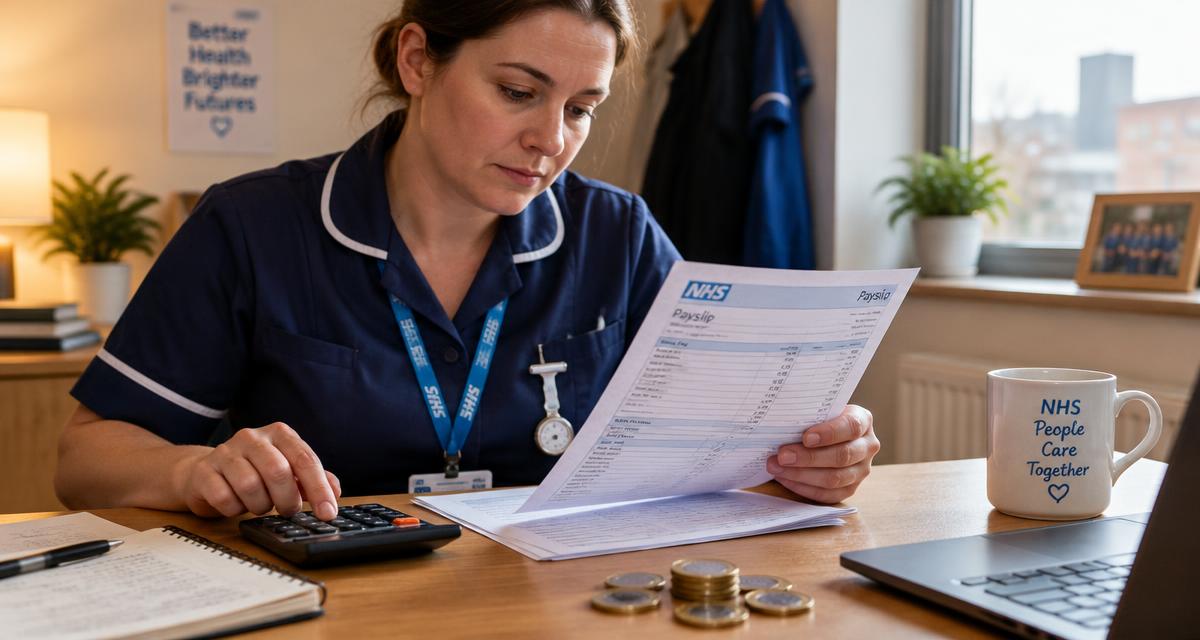
The annual pay award for NHS staff in Scotland is decided through a separate process to the one used in England, Wales, and Northern Ireland. This means the pay rise you receive, your working hours, and even your take-home pay can differ significantly from colleagues south of the border. Understanding these distinctions is key to knowing what to expect for the 2026/27 pay year.
How NHS Pay is Decided in Scotland
Healthcare is a devolved matter, which gives the Scottish Government the power to set its own policies, including how it pays its NHS staff. Unlike in England, where pay is determined following recommendations from the independent NHS Pay Review Body (PRB), Scotland engages in direct negotiations.
The process involves discussions between the Scottish Government, NHS employers, and health trade unions like the Royal College of Nursing (RCN) Scotland, UNISON, and the GMB. These groups form the Scottish Terms and Conditions Committee (STAC), which thrashes out a unique pay deal for staff on Agenda for Change (AfC) contracts.
This direct negotiation model often results in different outcomes. In recent years, Scotland has sometimes agreed to higher percentage awards or introduced structural changes to pay bands that differ from the rest of the UK.
The 2026/27 Pay Award: What to Expect
As of now, the exact pay award for NHS Scotland staff for 2026/27 has not been decided. The negotiation cycle typically begins in the months leading up to the new financial year, which starts on 1st April.
Trade unions will survey their members and formulate a pay claim based on several factors:
- Inflation: The cost of living is always a central argument in pay negotiations.
- Recruitment and Retention: Unions will highlight staff shortages and argue that competitive pay is essential to attract and keep skilled workers.
- Pay Comparability: They will look at pay awards in other sectors and in the NHS elsewhere in the UK to ensure the Scottish offer remains attractive.
Once a final offer is made by the Scottish Government, unions will usually ballot their members to vote on whether to accept it. If negotiations are lengthy and an agreement isn't reached by 1st April 2026, any eventual pay rise is typically backdated.
To stay up to date, keep an eye on announcements from your union and the Scottish Government.
Key Differences: Scotland vs. England
While all UK nations use the Agenda for Change framework, the application and resulting package for staff can vary. The three main differences are the pay award itself, working hours, and income tax.
1. The Annual Pay Award
Because of separate negotiations, the headline pay rise figure often differs. For example, in previous years, the percentage uplift agreed in Scotland has sometimes been higher than that recommended by the PRB in England. These differences compound over time, leading to variations in the cash value of each pay point within the bands.
To illustrate how the underlying scales can diverge, the table below shows the pay bands for NHS England for 2025/26, following their 3.6% award. The Scottish figures for the same period will be determined by their own negotiations and will likely be different.
| Band | NHS England Salary (from 1 April 2025) |
|---|---|
| Band 2 | £24,465 |
| Band 3 | £24,937 - £26,598 |
| Band 4 | £27,485 - £30,162 |
| Band 5 | £29,970 - £36,483 |
| Band 6 | £37,338 - £44,962 |
| Band 7 | £46,148 - £52,809 |
| Band 8a | £53,755 - £60,504 |
Note: This table is for illustrative purposes only. Always check with your payroll department for the exact scales that apply to you in NHS Scotland.
2. The Standard Working Week
This is one of the most significant differences. NHS Scotland has been moving towards a standard full-time working week of 36 hours for AfC staff, with no loss of pay. This is shorter than the 37.5-hour week that remains the standard in England, Wales, and Northern Ireland.
A shorter working week for the same annual salary means your hourly rate of pay is effectively higher. Over a year, this adds up to around 78 fewer contractual hours compared to a colleague in England, which is a major boost for work-life balance.
3. Income Tax
Your take-home pay is also directly affected by Scotland's unique income tax system. The Scottish Parliament sets its own tax bands and rates, which are different from those in the rest of the UK (rUK).
Typically, Scotland has more tax bands, with different thresholds and rates. This means that for the exact same gross salary, your net pay—the amount you actually receive in your bank account—could be higher or lower than if you worked elsewhere in the UK. The impact varies depending on your earnings; some lower earners may pay less tax, while higher earners often pay more. You can see how this might affect you by modelling your salary with an NHS take-home pay calculator that accounts for Scottish tax rates.
A Worked Example: A Band 6 Nurse
Let's consider a scenario to see how these differences play out. Imagine a Band 6 nurse with two years of experience, working full-time.
In England, based on 2025/26 scales, their salary might be £39,405 for a 37.5-hour week. In Scotland, the salary figure for the same role could be different due to separate pay deals.
However, let's assume for a moment the gross annual salary was identical. The Scottish nurse would still have a different employment package:
- Working Hours: They would be contracted to work 36 hours per week, not 37.5. This gives them an extra 1.5 hours off each week compared to their English counterpart.
- Hourly Rate: Because they work fewer hours for the same money, their hourly rate is higher. (£39,405 / 52.14 weeks / 36 hours = £21.01 per hour in Scotland vs. £39,405 / 52.14 weeks / 37.5 hours = £20.17 per hour in England).
- Take-Home Pay: After deductions, their net pay would be different. The amount of income tax they pay would be calculated using Scottish tax bands, which could lead to a different final take-home amount compared to a colleague in England.
This simple example shows that you have to look beyond the headline salary figure to understand the full value of an NHS Scotland contract. The combination of pay, hours, and tax creates a distinct overall package.
Planning Your Career in NHS Scotland
Whether you're already working in NHS Scotland or considering a move, understanding these financial nuances is important. When applying for a new role, the different working week can be a significant draw, offering a better work-life balance from the outset.
If you're preparing for a promotion or a new job, make sure your application reflects your skills and experience effectively. Tools like a professional CV builder can help you present your career history clearly, ensuring you're ready to take the next step within the Scottish system or wherever your career takes you.
Key takeaways
- NHS Scotland negotiates its pay directly with the Scottish Government, separately from the process in the rest of the UK.
- The 2026/27 pay award for Scotland has not yet been determined and will likely differ from the award in England.
- A key benefit in Scotland is the move to a shorter 36-hour standard working week for the same pay, increasing the effective hourly rate.
- Scottish income tax bands and rates are different, which will affect your final take-home pay compared to colleagues on the same gross salary in other UK nations.
- To find out the latest on the 2026/27 pay negotiations, you should follow updates from your trade union and the Scottish Government.