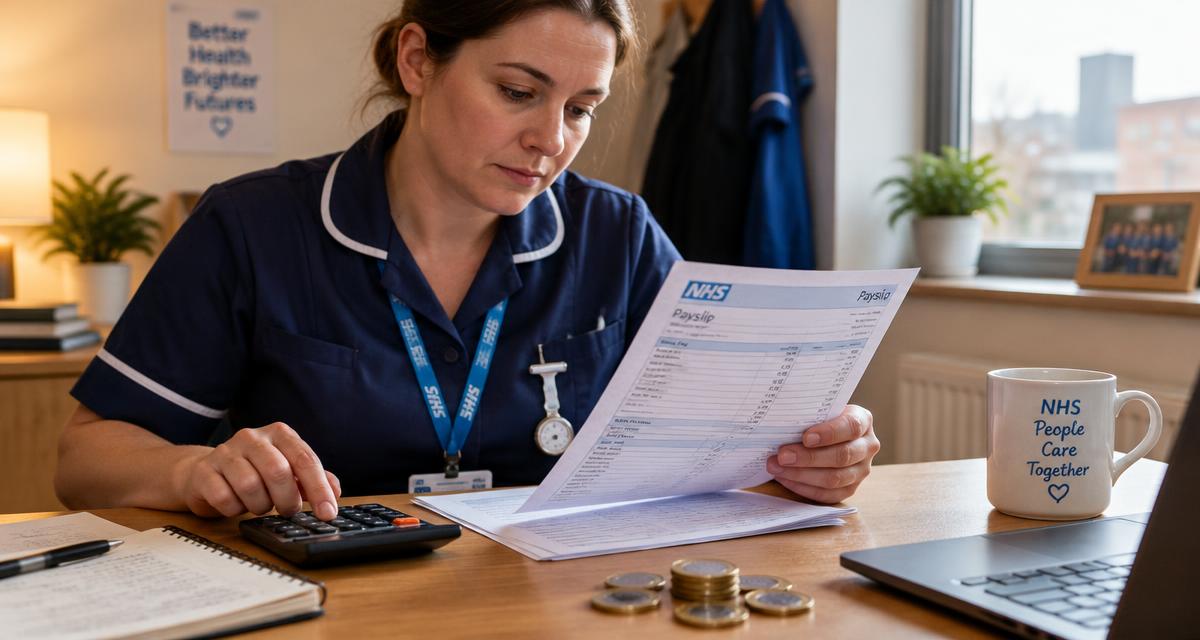
The pay award for Health and Social Care (HSC) staff in Northern Ireland for 2026/27 has not yet been decided. The process involves recommendations from the NHS Pay Review Body (PRB) and a final decision by the Northern Ireland Department of Health, which is typically announced mid-year and backdated to 1st April. While staff hope for parity with England, past awards have sometimes been delayed due to local budget negotiations.
How HSC Pay is Decided in Northern Ireland
Understanding the annual pay process can help manage expectations. It’s a multi-stage affair involving several key organisations and a great deal of negotiation.
The journey begins with the NHS Pay Review Body (PRB). This independent body is tasked with making recommendations on pay for Agenda for Change (AfC) staff across the UK. To do this, they gather evidence from a wide range of sources, including:
- Trade unions and staff associations (like the RCN, UNISON, GMB and NIPSA) who represent the views and demands of the workforce.
- NHS and HSC employers, who provide data on recruitment, retention and affordability.
- Government departments, including the Department of Health in Northern Ireland, who submit evidence on the economic climate and public finances.
Once the PRB makes its recommendation, usually in the spring, the UK Government responds for England. The devolved administrations in Scotland, Wales, and Northern Ireland then make their own decisions. In Northern Ireland, the Department of Health, under the direction of the Health Minister and the NI Executive, determines the final award for HSC staff. This decision is heavily influenced by the overall budget allocated to Northern Ireland.
Historically, this has sometimes led to frustrating delays for HSC staff. While the stated goal is often to maintain pay parity with England, political instability and budgetary pressures have, in the past, meant that NI awards are confirmed and paid months after they have been settled elsewhere.
What to Expect for the 2026/27 Pay Award
It is too early to know the exact figure for the 2026/27 HSC pay award. The PRB will begin gathering its evidence in late 2025 and early 2026 before making its recommendation. The final figure will be influenced by several key factors.
Inflation will be a major consideration. Unions will argue that any award must protect staff from the rising cost of living, using measures like the Consumer Prices Index (CPI) as a baseline for their claim. The economic outlook for the UK and Northern Ireland will also play a crucial role, with the government making its decision based on affordability.
Workforce challenges are another critical piece of the puzzle. Evidence on staff vacancies, turnover rates, and the ability to recruit new staff will be central to the PRB's thinking. A fair pay award is seen as a vital tool for retaining experienced staff and attracting new talent to the HSC.
Once the recommendation is published and a decision is made in England, the focus will shift to Stormont. Trade unions will lobby the Department of Health to implement the recommended award in full. The process usually concludes with an announcement in the summer, with the pay increase backdated to 1st April 2026.
A Look at Recent Pay Awards
Looking at previous years gives us a useful context for what might be considered in 2026/27. Pay negotiations don't happen in a vacuum; they build on what has come before.
Here are the headline awards from recent years:
- 2023/24: A 5% consolidated increase, plus a one-off non-consolidated payment. This award came after significant industrial action by HSC staff, highlighting widespread dissatisfaction with pay levels.
- 2024/25: A 5.5% award.
- 2025/26: A 3.6% award.
These figures demonstrate a trend influenced by high inflation and intense negotiations. Unions will likely use the cumulative impact of these awards compared to inflation as part of their evidence to the PRB for the 2026/27 cycle. For the most accurate and up-to-date details on past awards, always check with your union or the Department of Health website.
Agenda for Change Pay Scales 2025/26 (England)
While we await the decision for Northern Ireland, the pay scales for England give us a reliable benchmark. The figures below show the national Agenda for Change pay bands in England from 1st April 2025, following their 3.6% award. It is highly likely that the Northern Ireland pay structure for 2026/27 will be based on a percentage increase applied to its own 2025/26 baseline, which is expected to align closely with these figures.
| Band | 2025/26 Salary (England) |
|---|---|
| Band 2 | £24,465 |
| Band 3 | £24,937 - £26,598 |
| Band 4 | £27,485 - £30,162 |
| Band 5 | £29,970 - £36,483 |
| Band 6 | £37,338 - £44,962 |
| Band 7 | £46,148 - £52,809 |
| Band 8a | £53,755 - £60,504 |
| Band 8b | £62,215 - £72,293 |
| Band 8c | £74,290 - £85,601 |
| Band 8d | £88,168 - £101,677 |
| Band 9 | £105,385 - £121,271 |
Note: Full-time hours are 37.5 per week. Progression through the pay points within a band usually depends on completing annual appraisals and meeting the requirements of your role.
How a Pay Rise Affects Your Salary: A Scenario
Let's consider a realistic example. A Band 6 dietitian with over five years of experience is at the top of their band. Based on the 2025/26 England figures, their basic annual salary would be £44,962. They work full-time (37.5 hours per week) in a community role within the Belfast Trust.
If the 2026/27 pay award was, for example, 3.5%, their basic salary would increase. The calculation would be: £44,962 x 1.035 = £46,535. This represents an annual increase of £1,573 before tax.
However, this isn't the full story. Their monthly take-home pay is affected by tax, National Insurance, and pension contributions (currently tiered based on earnings). Any overtime or unsocial hours payments (enhancements) would also be recalculated based on the new higher basic salary. To see how a potential pay rise could affect your net pay, you can use an NHS take-home pay calculator, which can be adjusted for Northern Ireland's specific settings.
Planning Your Career and Pay Progression
The annual pay award is only one part of your earnings potential. Actively managing your career is the most effective way to increase your salary over the long term. Agenda for Change is designed to reward growing experience and responsibility.
Moving up a pay band is the fastest way to a significant salary increase. This means applying for a new role with greater responsibilities. Start by looking at job descriptions for roles in the band above you. Identify the skills, qualifications, and experience required that you don't yet have. Discuss your ambitions with your line manager during your appraisal and create a personal development plan.
Even if you stay within your current band, you can still progress. Most bands have several pay points (or steps). You move up to the next point automatically after a set number of years in the role, provided you are meeting the standards of your job. This is reviewed through your annual appraisal and the Knowledge and Skills Framework (KSF) process.
When you're ready to apply for that next-level job, make sure your application stands out. A well-crafted supporting statement is crucial for getting shortlisted. Tools like our Application Co-pilot can help you articulate how your experience matches the person specification for your target role.
Where to Find Reliable Pay Information
During the pay negotiation period, rumours and speculation can be widespread. It's important to rely on official sources for accurate information.
Your first port of call should be your trade union. They are directly involved in the process and provide regular updates to their members. The websites for UNISON Northern Ireland, the Royal College of Nursing (RCN), NIPSA, GMB, and others will have dedicated sections on pay.
The Department of Health (NI) website is the official source for any announcements from the government. Pay circulars confirming the final award will be published here.
For UK-wide context on the PRB process, the NHS Employers website is an excellent resource. Finally, your own trust's HR and payroll department will have the definitive details on how and when the new pay rates will be applied to your salary.
Key takeaways
- The 2026/27 HSC pay award for Northern Ireland is yet to be determined and will not be confirmed until mid-2026.
- The decision rests with the NI Department of Health, following a recommendation from the UK-wide NHS Pay Review Body (PRB).
- Key factors influencing the award will include inflation, the economy, and HSC recruitment and retention data.
- Any award is typically backdated to 1st April of the pay year.
- While pay parity with England is the aim, the final award and its implementation can be subject to delays based on the NI budget.
- Always consult official sources like your trade union and the Department of Health for the most reliable updates.