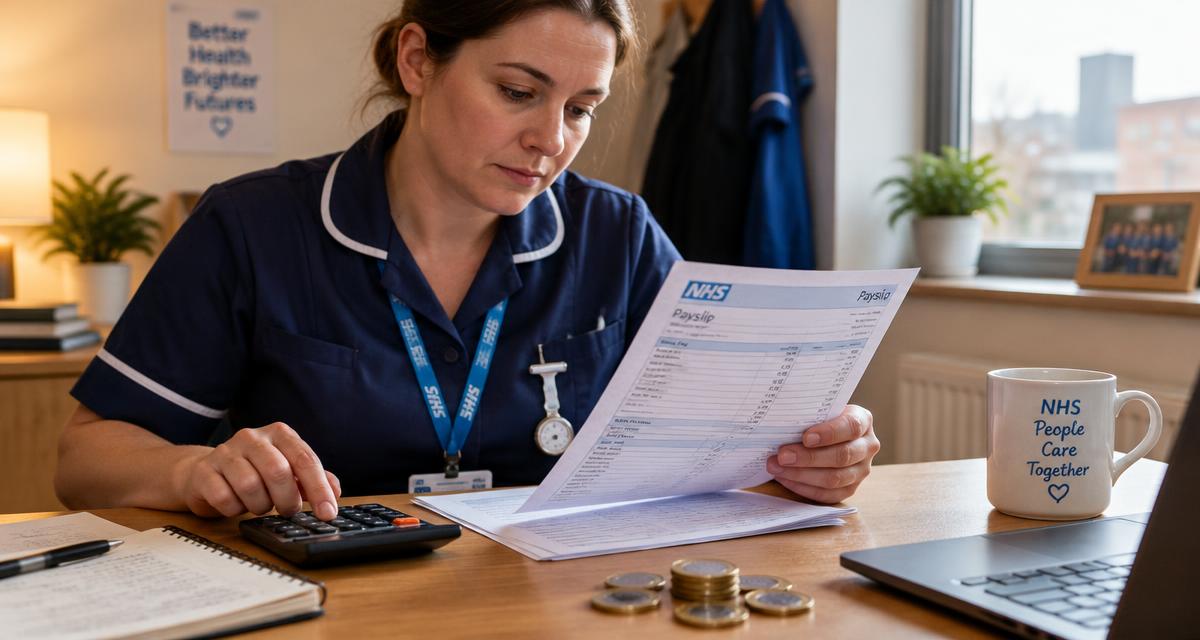
The 2026/27 NHS pay award process begins in autumn 2025, with independent Pay Review Bodies gathering evidence before making recommendations to the government. A final decision on any pay increase is typically announced in summer 2026 and backdated to 1 April 2026 for millions of NHS staff.
What are the Pay Review Bodies?
Every year, the pay for most NHS staff is reviewed through a formal process. This isn't handled by NHS England or individual trusts, but by independent bodies appointed by the government. Their role is to provide impartial advice to ensure pay levels are fair for staff, the taxpayer, and the health service.
There are two key bodies for the NHS:
- The NHS Pay Review Body (NHSPRB) advises on the pay for all staff employed under the Agenda for Change (AfC) contract. This covers over a million people, including nurses, paramedics, healthcare assistants, administrative staff, and many more.
- The Review Body on Doctors' and Dentists' Remuneration (DDRB) provides recommendations for doctors and dentists, including consultants, junior doctors, and GPs.
These bodies spend months gathering and analysing complex evidence from all sides. They consider the economic climate, inflation, and the unique challenges facing the health service, such as staff shortages and morale.
The Annual Pay Review Timeline: A Step-by-Step Guide
The pay review process follows a predictable annual cycle. While the exact dates can shift slightly each year, the key stages remain consistent. Here’s what the timeline for the 2026/27 award will likely look like.
Autumn 2025: The Process Begins
The starting gun is fired when the government sends its ‘remit letter’ to the NHSPRB and DDRB. This letter formally asks them to begin the review process and sets out the key areas they should consider. This usually includes government priorities like controlling inflation, economic growth targets, and the overall affordability of a pay rise.
Winter 2025/26: Gathering Evidence
This is the most intensive phase. The review bodies issue a ‘call for evidence’ to key stakeholders. This is their chance to make their case. Organisations that submit detailed evidence include:
- Government departments from England, Wales, Scotland, and Northern Ireland.
- NHS Employers, which represents the management perspective.
- NHS trade unions, such as the Royal College of Nursing (RCN), UNISON, the GMB, and the British Medical Association (BMA).
The evidence from unions is particularly crucial as it represents the views of staff on the ground. They present data on the rising cost of living, survey results on morale and intentions to leave the NHS, and arguments for why a significant pay rise is needed to recruit and retain vital staff.
Spring 2026: Deliberation and Analysis
Once all the written evidence is in, the review bodies get to work. They hold oral evidence sessions, where they can question stakeholders directly on their submissions. This allows them to dig deeper into the data and challenge assumptions.
Following these sessions, the PRB members deliberate in private. They weigh the competing arguments—the unions' calls for a restorative pay award against the government's concerns about affordability—to arrive at their final recommendations.
Early Summer 2026: Recommendations Submitted to Government
By late spring or early summer, the NHSPRB and DDRB will have finalised their reports. These detailed documents, often running to hundreds of pages, contain their analysis and a specific percentage recommendation for the pay award. The reports are submitted confidentially to the Secretary of State for Health and Social Care and other relevant ministers.
Summer 2026: The Government's Decision and Announcement
This stage can often feel like a waiting game for staff. The government takes time to consider the reports' recommendations alongside its own budget pressures. There is no fixed date for a response, and the announcement can happen any time from June to late July.
The government is not legally bound to accept the PRBs' advice. It can choose to accept the recommendation in full, award a lower amount, or ‘stage’ the award (pay it in instalments). The final decision is typically announced in a statement to Parliament, and the full PRB reports are published on gov.uk at the same time.
Late Summer/Autumn 2026: Backdated Pay Arrives in Payslips
Because the pay award applies from 1 April 2026, but isn't announced until the summer, any increase must be backdated. Once the decision is public, NHS payroll departments work to implement the new pay scales. This means your first payslip after the announcement will be higher, and it will also include a lump sum of back pay covering the months from April onwards.
What Factors Influence the Pay Award?
The Pay Review Bodies balance a complex range of factors when forming their recommendations. They don't just pick a number out of the air. Their final report will show detailed analysis of:
- Inflation: The current and projected rates of inflation (CPI and RPI) are a key consideration, as they determine the real-terms value of any pay rise.
- The Economy: The overall health of the UK economy and the government's stance on public sector spending.
- Recruitment and Retention: Vacancy rates across the NHS are a critical indicator. If trusts are struggling to hire and keep staff, this strengthens the case for a more generous award.
- Morale and Motivation: The PRBs consider evidence from staff surveys and unions on the mood of the workforce.
- Affordability: The cost to the NHS budget is a major factor cited by the government and NHS Employers.
- Pay Comparability: How NHS pay stacks up against similar roles in the private and wider public sectors.
How a Pay Rise Affects Your Payslip: A Worked Example
It can be hard to visualise what a percentage increase means for your bank balance. Let’s look at a simple, hypothetical scenario.
Imagine Omar is a Band 5 nurse working full-time. His current basic salary is £32,000 per year. Let's say the government announces a hypothetical 3% consolidated pay award for 2026/27, effective from 1 April 2026.
- New Annual Salary: £32,000 x 1.03 = £32,960
- Annual Increase: £960
- Monthly Gross Increase: £960 / 12 = £80
If the announcement is made in July, Omar’s August payslip would include his new, higher monthly salary plus four months of back pay (for April, May, June, and July).
- Back Pay Calculation: £80 (monthly increase) x 4 (months) = £320 (gross)
So, in his August pay packet, Omar would receive his new monthly salary plus this £320 lump sum, all before tax and other deductions. To get a better idea of how a potential pay rise could affect your net income, you can model different scenarios using an NHS take-home pay calculator.
What if the Award is Disappointing?
The pay review process is designed to be independent, but the government holds the final say. In recent years, there have been instances where the government's award has been rejected by unions, leading to industrial disputes.
For example, the 2023/24 award of 5% was accompanied by a one-off payment, but this only came after significant industrial action by multiple health unions. A 'consolidated' award, like the 5%, is added to your basic pay and is pensionable. A 'non-consolidated' or one-off payment is a single lump sum that doesn't increase your baseline salary for future years.
If the 2026/27 award is viewed as insufficient by union members, they may be balloted on whether to take industrial action, which could include striking. This is why being a member of a trade union or professional body is the most direct way to have your voice heard during the pay-setting process.
Key takeaways
- The NHS pay review process for 2026/27 is led by the independent NHSPRB (for Agenda for Change staff) and DDRB (for doctors and dentists).
- The process starts in Autumn 2025, with evidence gathered from unions, NHS Employers, and government.
- The bodies make their confidential recommendations to the government in early summer 2026.
- A final decision is typically announced by the government in summer 2026.
- Any pay award is almost always backdated to the start of the financial year on 1 April.
- The final decision is influenced by inflation, affordability, and critical NHS workforce issues like recruitment and retention.
- For official updates, keep an eye on announcements from the government, NHS Employers, and your trade union.