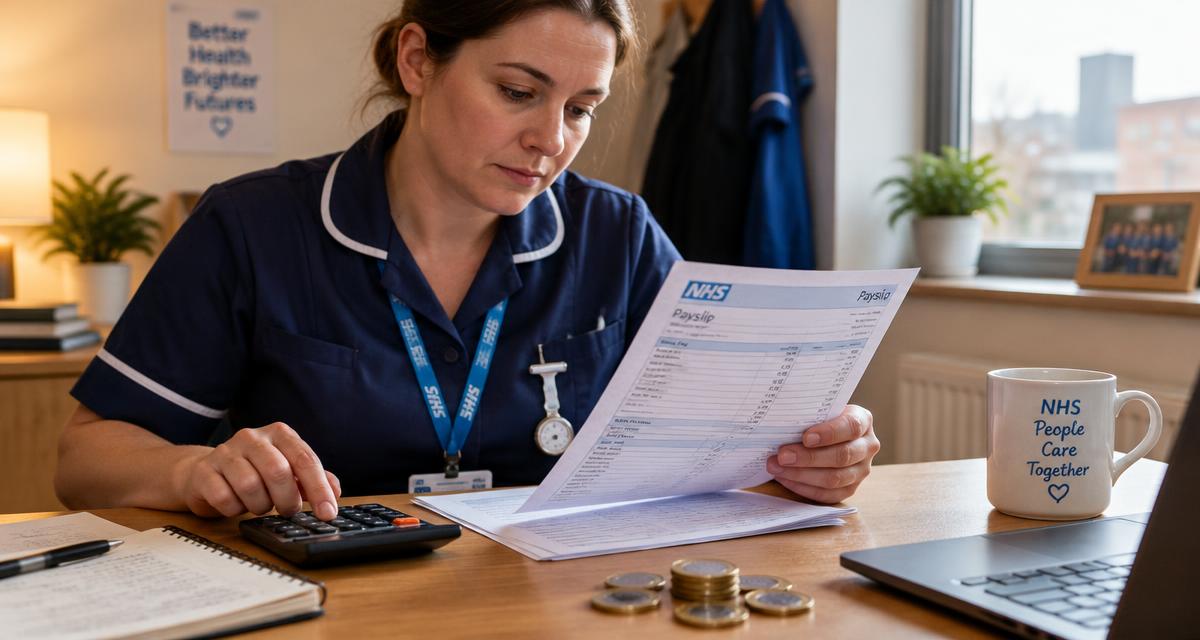
When will the 2026/27 NHS pay rise be paid? Our guide explains the likely back pay date, how arrears are calculated, and what to expect on your payslip.
The 2026/27 NHS pay rise for staff on Agenda for Change contracts will be backdated to 1 April 2026. While the exact date is confirmed much later in the year, based on previous years, you can expect the new pay rates and any back pay to arrive in your payslip in late summer or early autumn 2026, most likely in August or September.
This guide explains the annual pay review process, how your back pay is calculated, and what it means for your take-home pay.
How the NHS Pay Award is Decided
Each year, the pay for NHS staff on the Agenda for Change (AfC) contract is reviewed. This isn't an automatic process with a fixed outcome; it involves several stages and key organisations.
The central body is the NHS Pay Review Body (PRB). The PRB is independent and advises the government on pay for all AfC staff. Its process typically follows this pattern:
- Evidence Gathering: In late 2025 and early 2026, the PRB will invite evidence from relevant parties. This includes trade unions (like the Royal College of Nursing, UNISON, and the GMB), NHS Employers, and government departments from across the UK.
- Key Considerations: When forming its recommendation, the PRB looks at a wide range of factors. These include the cost of living and inflation, the government's inflation targets, the wider economy, and NHS-specific issues like staff morale, retention, recruitment, and overall vacancy numbers.
- The Recommendation: After weighing all the evidence, the PRB writes a detailed report with its recommendations for the percentage pay award. This report is submitted to the government, usually in late spring or early summer.
- The Final Decision: The government is not required to accept the PRB's recommendation, although it often forms the basis of the final award. The Secretary of State for Health and Social Care makes the final decision, typically announcing it to Parliament in July.
Because this decision comes several months after the start of the financial year, the pay award is always backdated to 1 April. This ensures staff receive the full benefit of the annual rise.
When is Back Pay Likely to Arrive?
Once the government announces the pay award for 2026/27, the information is passed to NHS trusts and payroll departments across the country. They then face the significant task of updating their systems to reflect the new pay scales for every single employee.
This implementation takes time. Payroll teams need to ensure the new rates are applied correctly to basic pay, overtime, unsocial hours payments, and any other allowances linked to salary. They also need to calculate the back pay owed to each person.
Based on the timeline of previous years, here is a likely sequence of events for the 2026/27 award:
- April 2026: The pay award period begins. You continue to be paid at the 2025/26 rate.
- July 2026: The government is likely to announce its decision on the pay award.
- August or September 2026: This is the most common window for the new pay rates to be implemented. Your payslip in one of these months should show your new, higher hourly or monthly rate, plus a lump sum payment for the back pay owed from 1 April.
It's important to remember this is an estimate. Occasionally, complex negotiations or delays in the announcement can push the payment date back. Always check communications from your trust's HR or payroll department for the confirmed date.
Understanding Your Back Pay (Arrears)
Back pay, often referred to as arrears on your payslip, is the money you are owed for the period between the start of the pay year (1 April) and when the new rate is actually paid.
It is the difference between what you were paid and what you should have been paid at the new, higher rate.
For example, if the pay award is implemented in your September payslip, your back pay will cover the five months you worked at the old rate: April, May, June, July, and August. The calculation is applied to all your contractual earnings during that time, including enhancements for unsocial hours and any overtime you worked.
A Worked Example of Calculating Arrears
Let's imagine a scenario to see how this works in practice. Consider a Band 6 nurse on the top spine point, working full-time (37.5 hours per week). Their salary from 1 April 2025 is £44,962.
Now, let's assume for this example that the 2026/27 pay award is a hypothetical 3% rise.
- Old Annual Salary (2025/26): £44,962
- New Annual Salary (with 3% rise): £44,962 x 1.03 = £46,310.86
- Old Monthly Gross Pay: £44,962 / 12 = £3,746.83
- New Monthly Gross Pay: £46,310.86 / 12 = £3,859.24
- Monthly Difference: £3,859.24 - £3,746.83 = £112.41
If the new salary is paid in the September payslip, they are owed back pay for five months (April to August). The calculation would be:
5 months x £112.41 = £562.05
This £562.05 (before tax) would be added as a lump sum to their regular September pay.
How Back Pay Affects Your Payslip and Tax
Receiving a lump sum of back pay will have a noticeable impact on your payslip for that month. It's treated as regular earnings, which means it is subject to all the usual deductions.
Your back pay will be added to your normal monthly salary, and the total amount will be used to calculate:
- Income Tax
- National Insurance contributions
- NHS Pension contributions
- Student Loan repayments (if applicable)
A key point to remember is that tax is calculated on your earnings in the month you are paid, not the month you earned it. Because the back pay increases your total earnings for that single month, it can sometimes push you into a higher income tax bracket temporarily. This might mean you pay a higher percentage of tax on that lump sum than you might expect. Don't be alarmed if your deductions seem unusually high in your back-pay month; this is normal.
It's always a good idea to check your payslip carefully. You can model how a pay rise might affect your monthly income using an NHS take-home pay calculator.
Recent NHS Pay Awards and 2025/26 Pay Scales
Looking at previous years helps to build a picture of how pay awards are handled. Recent Agenda for Change awards in England have been:
- 2023/24: A 5% consolidated increase, plus a one-off, non-consolidated payment.
- 2024/25: A 5.5% consolidated increase.
- 2025/26: A 3.6% consolidated increase.
The best way to increase your pay is through career progression. Moving up to the next band, or even securing a promotion within your current one, will have a far greater impact on your long-term earnings than any annual pay award. If you're thinking about your next career move, make sure your application is as strong as it can be with professional tools like a CV builder or an interview preparation pack.
For reference, the pay scales for 2025/26, which are effective from 1 April 2025, are shown below.
Agenda for Change Pay Bands 2025/26 (England)
| Band | Salary Range / Pay Points |
|---|---|
| Band 2 | £24,465 |
| Band 3 | £24,937 - £26,598 |
| Band 4 | £27,485 - £30,162 |
| Band 5 | £29,970 / £32,324 / £36,483 |
| Band 6 | £37,338 / £39,405 / £44,962 |
| Band 7 | £46,148 / £48,526 / £52,809 |
| Band 8a | £53,755 - £60,504 |
| Band 8b | £62,215 - £72,293 |
| Band 8c | £74,290 - £85,601 |
| Band 8d | £88,168 - £101,677 |
| Band 9 | £105,385 - £121,271 |
Key takeaways
- The 2026/27 NHS pay award for Agenda for Change staff will be effective from 1 April 2026.
- The government's final decision on the pay rise percentage is usually announced in July, following recommendations from the NHS Pay Review Body.
- Back pay is likely to be paid in a lump sum in your August or September 2026 payslip, though this can vary.
- The back pay amount is the difference between the old and new pay rates for all hours worked from 1 April until the new rate is implemented.
- This lump sum is taxable and subject to National Insurance, pension, and student loan deductions in the month it is paid.
- For the most accurate and up-to-date information, always refer to official sources like gov.uk, NHS Employers, and communications from your union and your trust.