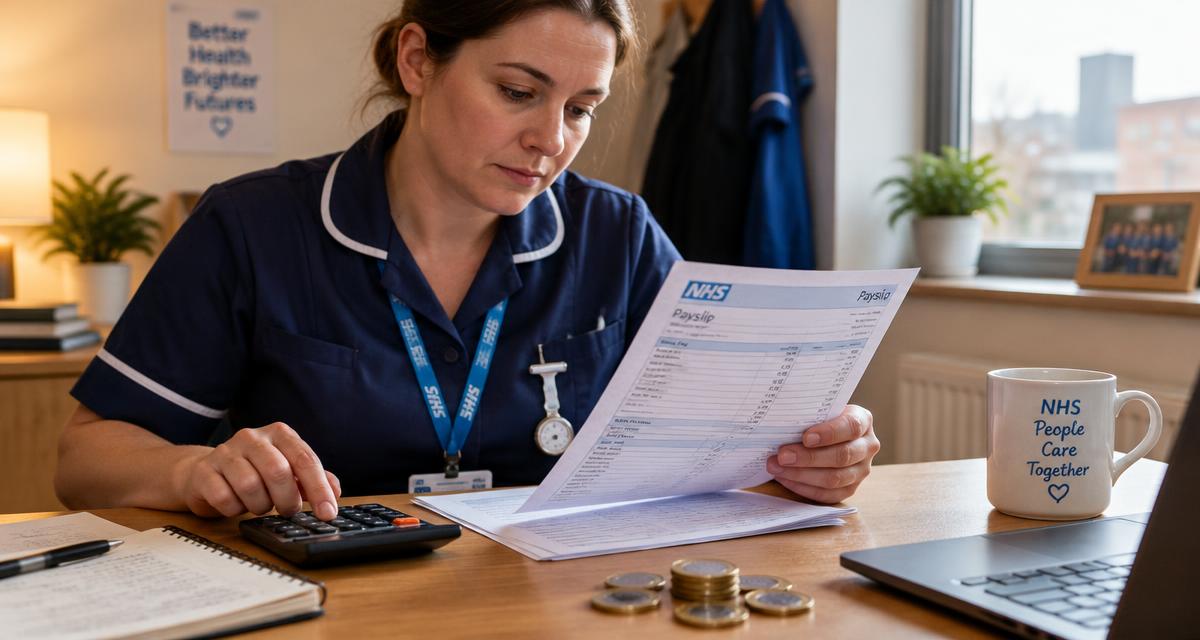
NHS Pay Rise 2026: An Overview
The 2026/27 NHS pay award process will begin in late 2025, with the government expected to announce its final decision in the summer of 2026. While the exact percentage is not yet known, the award for Agenda for Change staff in England will be based on recommendations from the independent NHS Pay Review Body and will be backdated to 1 April 2026. This article walks you through the key dates to watch and how the process works.
Understanding the Annual Pay Review Process
The NHS pay award isn't a figure plucked out of thin air. It's the result of a long, formal process that repeats every year. Understanding this cycle helps you know what to expect and when.
The entire process centres on the NHS Pay Review Body (PRB). This is an independent body that advises the government on pay for all staff on Agenda for Change (AfC) contracts. Their job is to weigh up evidence from all sides and make a fair and balanced recommendation.
Here’s how it unfolds:
- Call for Evidence: The government, through the Department of Health and Social Care (DHSC), formally asks the PRB for its recommendation.
- Submitting Evidence: Key stakeholders prepare and submit detailed reports. This includes trade unions (like the RCN, UNISON, and GMB), NHS Employers (representing the management side), and the DHSC itself.
- Deliberation: The PRB spends several months analysing all the evidence, considering economic data, and hearing oral evidence from the key parties.
- Recommendation: The PRB writes a detailed report containing its final recommendation and submits it confidentially to the government.
- Final Decision: The government considers the PRB's report and makes the final decision on the pay award. While they often follow the recommendation, they are not legally bound to do so.
This process applies to NHS staff on AfC contracts in England. While the governments in Scotland, Wales, and Northern Ireland run their own pay negotiations, the decision in England often influences the outcomes across the UK.
Key Dates for Your 2026/27 Pay Rise Diary
The pay review timeline follows a predictable pattern. While exact dates can shift slightly each year, you can mark your calendar with these key periods for the 2026/27 award.
- Late 2025: The process kicks off with the official call for evidence. Behind the scenes, unions and NHS bodies will already be gathering data and surveying their members to build their cases.
- January – February 2026: This is when the evidence is formally submitted to the PRB. The submissions are usually made public, giving the first real indication of what unions are demanding versus what the government and employers believe is affordable.
- March – May 2026: The PRB enters its deliberation phase. The panel of experts will scrutinise the data on inflation, staffing, and the economy, and may call stakeholders for further questioning.
- May – June 2026: The PRB submits its confidential report to the Prime Minister and the Secretary of State for Health and Social Care. A period of nervous waiting begins.
- June – July 2026: The government announces its decision. This is typically done via a written ministerial statement in Parliament and is often timed to coincide with announcements for other public sector groups like teachers and the police.
- July – September 2026: Once the award is confirmed, NHS payroll teams across the country get to work. The new pay rate, along with any back pay owed from 1 April, should appear in your payslip during this period.
A Refresher: The 2025/26 Pay Award
To understand what the future might hold, it’s helpful to look at the most recent settlement. For the 2025/26 financial year, staff on Agenda for Change contracts in England received a 3.6% consolidated pay award. This increase took effect from 1 April 2025.
Here’s how that award translated into the basic full-time salaries (based on a 37.5-hour week) for each pay band.
| Band | 2025/26 Salary Range (£) | Key Pay Points |
|---|---|---|
| Band 2 | £24,465 | Single pay point |
| Band 3 | £24,937 - £26,598 | Two pay points |
| Band 4 | £27,485 - £30,162 | Two pay points |
| Band 5 | £29,970 - £36,483 | Entry, after 2 years, after 4 years |
| Band 6 | £37,338 - £44,962 | Entry, after 2 years, after 5 years |
| Band 7 | £46,148 - £52,809 | Entry, after 2 years, after 5 years |
| Band 8a | £53,755 - £60,504 | Incremental progression |
| Band 8b | £62,215 - £72,293 | Incremental progression |
| Band 8c | £74,290 - £85,601 | Incremental progression |
| Band 8d | £88,168 - £101,677 | Incremental progression |
| Band 9 | £105,385 - £121,271 | Incremental progression |
Remember, these figures represent your basic salary. They do not include unsocial hours payments, overtime, or any other allowances you may receive.
How a Pay Rise Translates to Your Payslip
The headline percentage of the pay award is important, but it’s the final figure on your payslip that really matters. The difference between your gross (basic) pay and your net (take-home) pay can be significant once deductions are made.
These deductions typically include:
- Income Tax
- National Insurance contributions
- NHS Pension contributions
- Student loan repayments (if applicable)
A Worked Example
Let's imagine a scenario. Ben is a Band 5 nurse with over four years of experience, working full-time. His basic salary for 2025/26 is £36,483.
If the 2026/27 pay award was a hypothetical 4%, his new basic salary would be £37,942.32 (£36,483 x 1.04). If the award is announced in July, he would be due back pay for April, May, and June. This lump sum would be added to his July or August payslip, and his monthly salary would increase from that point forward.
However, this entire amount is subject to tax, National Insurance, and pension deductions. The actual increase in his monthly take-home pay will be less than the gross increase. To get a clearer picture of how a future pay rise might affect your personal finances, you can model different scenarios using our NHS take-home pay calculator.
What Will Shape the 2026/27 Pay Deal?
The PRB considers a wide range of factors when making its recommendation. The arguments presented by unions and employers will focus on these key areas:
- Inflation: The cost of living is a primary consideration. The PRB will look at current and forecast inflation rates (like CPI and RPI) to determine what level of pay rise is needed to maintain living standards.
- Recruitment & Retention: Evidence of staffing gaps is a powerful argument. High vacancy rates and staff turnover figures across the NHS will strengthen the case for a more generous award to attract and keep skilled staff.
- Morale & Motivation: Unions will submit evidence from staff surveys and member feedback to paint a picture of workforce morale. This qualitative data helps the PRB understand the mood on the ground.
- The Wider Economy: The PRB compares NHS pay to that in the private and wider public sectors to ensure it remains competitive. They also consider the general health of the UK economy.
- Affordability: The government's submission will always focus on what it believes is affordable within the overall NHS budget and the nation's finances. This is often the main point of contention.
Planning Ahead: Your Career and Your Pay
Waiting for the annual pay award is one part of the picture, but you can also take proactive steps to boost your earnings and career progression. The period before the new financial year is a great time to reflect on your goals.
A pay rise provides a welcome lift, but the most significant salary increases come from moving up the career ladder. If you're feeling ready for a new challenge, perhaps it's time to aim for a promotion or a role in a higher band.
Start by updating your professional portfolio and getting your CV into top shape. Our Pro CV builder is designed specifically for healthcare roles and can help you highlight your skills effectively. If you secure an interview, thorough preparation is key. Make sure you can articulate your experience and demonstrate how you meet the person specification. You can get a head start with our comprehensive NHS interview preparation pack.
Even if you're happy in your current role, make sure you understand your band's pay progression points. For many bands, your salary increases automatically after a set number of years' experience. Check your contract and speak to your manager to ensure you know when your next incremental step is due.
A Look Back: Recent NHS Pay Awards
Context is everything. Looking at previous pay awards can help manage expectations and understand the general trend in public sector pay.
- 2023/24: A 5% consolidated pay rise, plus a one-off, non-consolidated payment for 2022/23. The one-off payment did not increase basic pay going forward.
- 2024/25: A 5.5% consolidated pay rise.
- 2025/26: A 3.6% consolidated pay rise.
The term 'consolidated' is important. It means the increase is permanent and added to your basic salary, affecting future pay rises and pension calculations. A 'non-consolidated' award is a one-time payment that doesn't affect your basic pay.
Key Takeaways
- The 2026/27 NHS pay review process will run from late 2025 to summer 2026.
- The final pay award decision is made by the government, based on a recommendation from the independent NHS Pay Review Body (PRB).
- Any pay award will be backdated to the start of the financial year, 1 April 2026.
- The size of the award will be influenced by inflation, NHS staffing levels, the wider economy, and government affordability arguments.
- For official updates, keep an eye on announcements from your union, NHS Employers, and the gov.uk website.
- When the award is finally paid, always check your payslip to ensure your new salary and any back pay are correct.