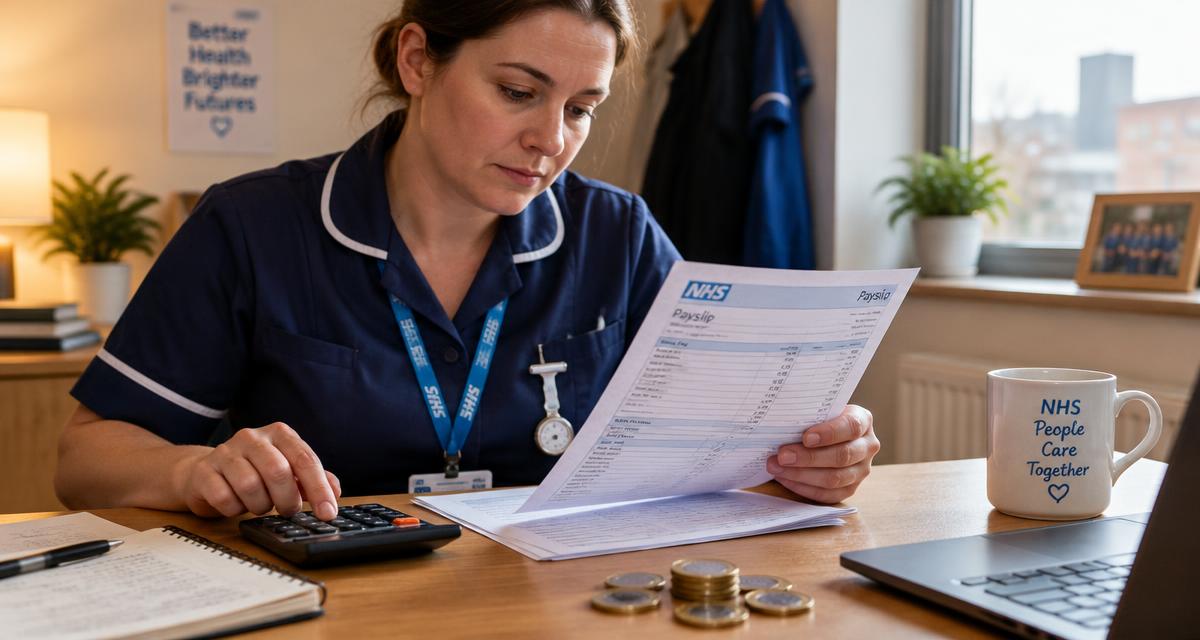
NHS pay under the Agenda for Change (AfC) contract has followed a complex path since its introduction in 2004. It has seen periods of steady growth, followed by years of pay freezes and caps during austerity, and more recently, a series of higher, though often contentious, annual awards. Understanding this history helps to contextualise your current salary and what might happen next.
What is Agenda for Change?
Agenda for Change (AfC) is the national pay and conditions system for all NHS staff, apart from doctors, dentists, and very senior managers. It was introduced in 2004 to create a fair and transparent structure, ensuring equal pay for work of equal value across the UK.
The system is built around a series of pay bands, from Band 2 to Band 9. Every non-medical job role in the NHS, from a hospital porter to a director of nursing, is evaluated and assigned to a specific band. Your band determines your salary range.
Within most bands, there are several pay points. You typically move up to the next point each year until you reach the top of your band, rewarding your growing experience. This annual progression is separate from the annual national pay award, which increases the value of all pay points across the board.
If you're aiming to move up to a higher band, you'll need a strong application that clearly demonstrates your skills and experience. Writing a compelling supporting statement is crucial, and our application copilot tool can help you structure your evidence effectively.
A Timeline of Key NHS Pay Awards
The story of NHS pay is one of distinct eras. While the early years of AfC saw pay awards that generally kept pace with the cost of living, the decade following the 2008 financial crisis brought a significant squeeze on earnings.
- The Austerity Era (2011-2018): This period had the most significant impact on staff pay in recent memory. It began with a two-year pay freeze from 2011 to 2013 for most staff. This was followed by several years of a strict 1% pay cap. With inflation often running higher than 1%, this meant a real-terms pay cut for most employees year after year.
- The 2018 Three-Year Deal: In 2018, a new three-year deal was agreed. This wasn't just a simple percentage rise. It was a major restructuring of the pay bands themselves, aimed at making progression faster. Many overlapping pay points were removed, and the time it took to reach the top of a band was shortened for many staff.
- The Post-Pandemic Period (2020-Present): The years following the pandemic have been marked by higher pay awards, but also by high inflation and significant industrial disputes. The awards have varied in structure and value:
- 2020/21: 3% increase.
- 2021/22: 3% increase.
- 2022/23: A flat-rate increase of £1,400. This was designed to give a greater percentage boost to those on lower bands.
- 2023/24: A 5% increase, accompanied by a one-off, non-consolidated payment to address cost of living pressures.
- 2024/25: A 5.5% increase.
- 2025/26: A 3.6% increase.
How NHS Pay Rises Are Decided
The annual pay award isn't decided arbitrarily. It's the result of a formal process involving the NHS Pay Review Body (PRB).
The PRB is an independent body that advises the government on pay for AfC staff. Each year, it gathers and reviews evidence from a range of stakeholders, including:
- The government (for each UK nation)
- NHS Employers (representing management)
- NHS trade unions (like the RCN, UNISON, and GMB, representing staff)
This evidence covers everything from inflation and the wider economy to staff morale, recruitment and retention challenges, and workload pressures. After considering all the evidence, the PRB makes a recommendation to the government. While the government usually accepts the PRB's recommendation, it is not bound to do so and makes the final decision. This can sometimes be a point of contention, leading to negotiations or industrial action.
The 2025/26 Pay Award in Detail
For the financial year starting 1 April 2025, the pay award for Agenda for Change staff in England is a 3.6% consolidated increase. This means all pay points on every band will increase by this amount.
The table below shows the full-time salaries for each band from 1 April 2025. These figures are based on a standard 37.5-hour week and represent your basic pay before tax, National Insurance, pension contributions, and any additional earnings from unsocial hours, overtime, or other allowances.
| Band | 2025/26 Annual Salary (£) |
|---|---|
| Band 2 | £24,465 |
| Band 3 | £24,937 - £26,598 |
| Band 4 | £27,485 - £30,162 |
| Band 5 | £29,970 (start), £32,324 (2+ yrs), £36,483 (4+ yrs) |
| Band 6 | £37,338 (start), £39,405 (2+ yrs), £44,962 (5+ yrs) |
| Band 7 | £46,148 (start), £48,526 (2+ yrs), £52,809 (5+ yrs) |
| Band 8a | £53,755 - £60,504 |
| Band 8b | £62,215 - £72,293 |
| Band 8c | £74,290 - £85,601 |
| Band 8d | £88,168 - £101,677 |
| Band 9 | £105,385 - £121,271 |
How a Pay Rise Affects Your Take-Home Pay
Seeing the headline percentage is one thing, but understanding what it means for your monthly budget is what really matters. Your gross salary is the figure shown in the pay scales, but your net (or take-home) pay is what you receive after deductions.
A Worked Example
Let's imagine a Band 5 nurse, Priya, working 30 hours a week (0.8 whole-time equivalent). She has been in the role for three years.
From 1 April 2025, the full-time salary for her experience level is £32,324. As she works 80% of full-time hours, her gross annual salary will be £32,324 x 0.8 = £25,859.20. Her gross monthly pay would be £2,154.93.
From this amount, she will have deductions for Income Tax, National Insurance, and her NHS Pension contribution. The final amount that arrives in her bank account will be her net pay. To get a precise breakdown of how a pay rise will affect your personal bottom line, it's helpful to use a specialised tool. Our NHS take-home pay calculator is designed for AfC staff and can give you a detailed view of your earnings after all deductions.
Looking Ahead to the 2026/27 Pay Award
The cycle for determining the 2026/27 pay award will begin later in 2025 when the PRB calls for evidence. Unions and employers will submit their cases, and the PRB will make its recommendation to the government in 2026.
It is impossible to predict the outcome. The final award will depend on many factors, including the rate of inflation at the time, the state of the UK economy, and the political landscape. For the most accurate and up-to-date information, you should always check official sources like the NHS Employers website, gov.uk, and communications from your trade union.
Pay awards are effective from 1 April each year. If the announcement is made after this date, as is often the case, the increase is backdated, and you'll receive the arrears in a subsequent payslip.
Key takeaways
- NHS pay is set by the Agenda for Change (AfC) framework, which has been in place since 2004.
- The history of pay awards is mixed, with a long period of freezes and caps in the 2010s leading to significant real-terms pay erosion.
- Recent years (post-2020) have seen higher percentage awards, though often against a backdrop of high inflation.
- The pay award for 2025/26 is a 3.6% consolidated increase for staff in England.
- The annual pay award is determined following recommendations from the independent NHS Pay Review Body (PRB), with the final decision resting with the government.
- Future pay awards are not guaranteed; always refer to official sources like NHS Employers and gov.uk for the latest confirmed details.